

 English
 русский
 Español
Why Do Carbon Steel Spiral Springs Fail Suddenly
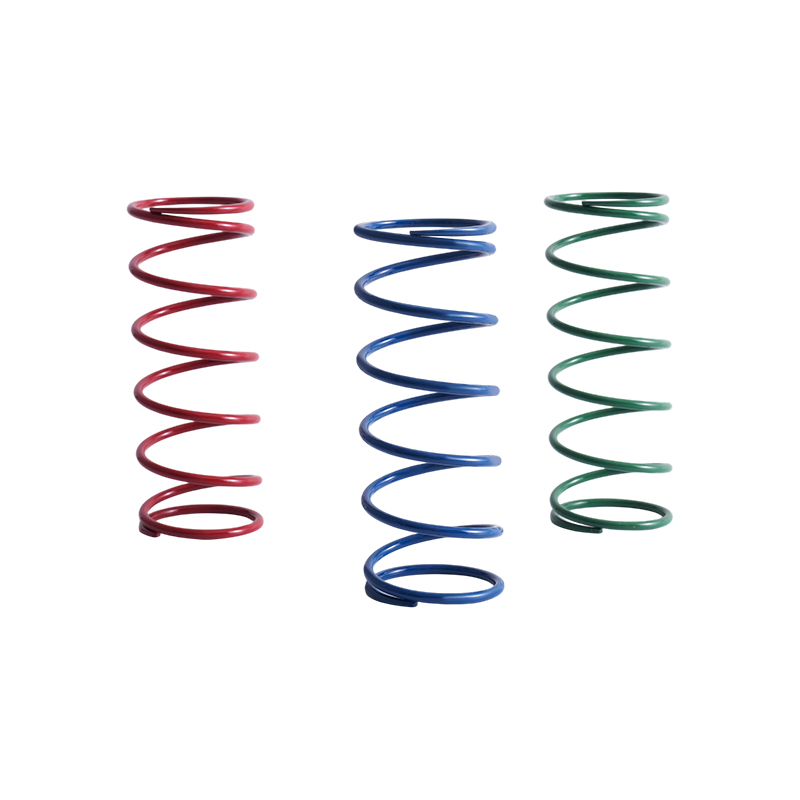
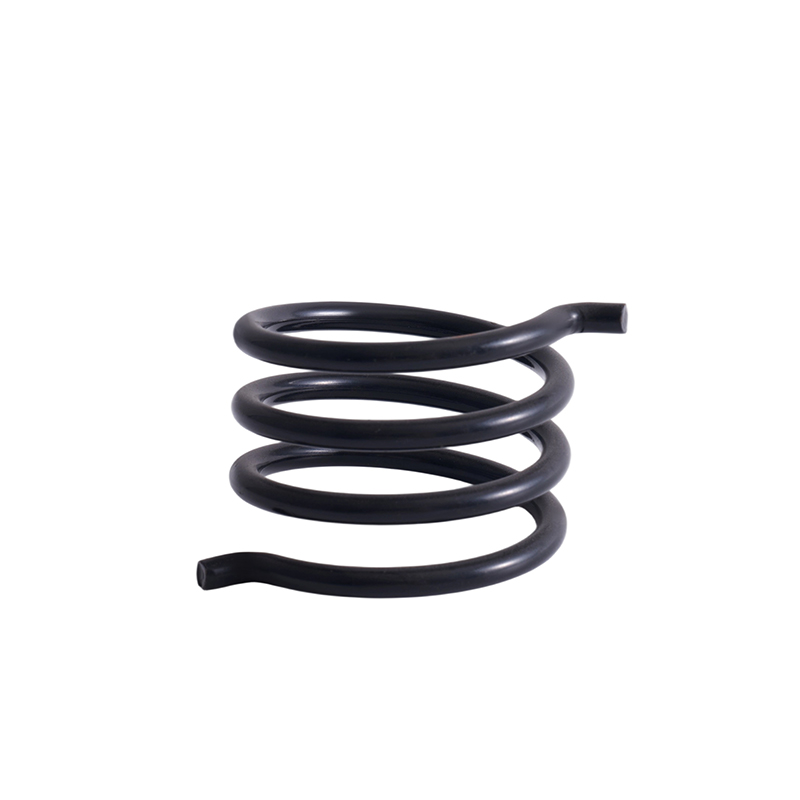
Industry News-Carbon steel spiral compression springs are widely used in heavy-duty mechanisms where cost efficiency and high load capacity matter more than corrosion resistance. Despite their robustness, these components are known for occasional abrupt fracture events that appear without obvious warning signs.
A carbon steel spiral compression spring typically operates under repeated compression cycles, where internal stress builds at coil contact zones and surface imperfections. Over time, this internal energy accumulation determines whether the spring maintains stable elasticity or shifts toward failure.
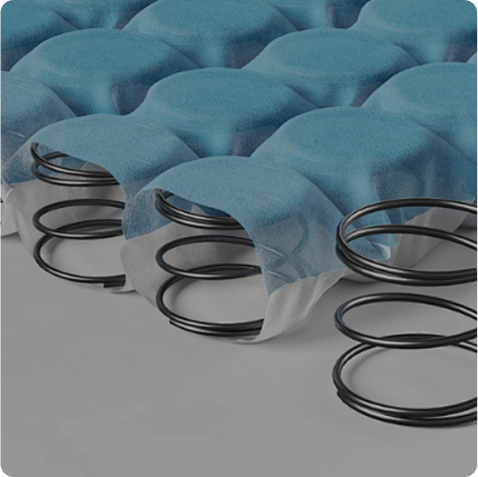
Stress Behavior in Spiral Compression Geometry
Non-uniform stress distribution
Spiral compression geometry does not distribute stress evenly along the wire. Inner coil regions experience significantly higher shear stress compared to outer sections. This imbalance becomes more pronounced under high deflection conditions.
Industry studies on helical springs confirm that fatigue cracks commonly initiate at the inner coil surface due to amplified shear stress concentration and geometric correction factors applied during loading analysis.
Cyclic loading accumulation
Each compression cycle introduces micro-level plastic strain, even when the load remains within nominal design limits. Over thousands or millions of cycles, these micro-strains accumulate into visible fatigue damage.
Fatigue remains the dominant failure mode in cyclic spring applications, where microscopic cracks grow gradually until sudden fracture occurs .
Stress range sensitivity
Performance degradation is driven more by stress range than peak load alone. A spring operating under moderate but repeated stress variation can fail earlier than one exposed to higher static load but fewer cycles.
Key Failure Mechanisms in Carbon Steel Spiral Springs
Fatigue crack initiation
Surface imperfections such as machining marks or minor corrosion pits act as stress concentrators. These sites become the origin of fatigue cracks that propagate inward with each load cycle.
Corrosion-assisted cracking
Carbon steel lacks inherent corrosion resistance. Exposure to humidity or chemical environments accelerates pit formation, which evolves into corrosion fatigue and weakens the wire cross-section.
Field analysis of industrial springs shows corrosion products containing sulfur and chlorine compounds at fracture zones, confirming environmental contribution to failure progression .
Overload plastic deformation
When compressive load exceeds elastic limits, permanent deformation occurs. The spring no longer returns to its original height, and local stress redistribution increases risk of subsequent fracture.
Buckling instability
Slender spiral springs may experience lateral deflection under compression. This uneven deformation introduces secondary bending stress that accelerates fatigue development.
Performance Comparison of Carbon Steel vs Alternatives
| Property | Carbon Steel Spiral Spring | Stainless Steel Spring | Alloy Spring (Chrome-Silicon) |
| Load capacity | High | Medium | High |
| Corrosion resistance | Low | High | Medium |
| Fatigue resistance | Moderate | Moderate–High | High |
| Cost efficiency | Strong advantage | Higher cost | Medium |
| Sudden fracture tendency | Higher under corrosion | Lower | Controlled |
Design Variables That Influence Failure Risk
Wire diameter and spring index
Smaller spring index values increase stiffness but also amplify stress concentration. Larger indexes improve flexibility but reduce load density.
Surface quality control
Surface roughness directly affects fatigue life. Even microscopic scratches can serve as crack initiation points under repeated compression cycles. Improved finishing methods significantly extend service life.
Heat treatment and stress relief
Heat treatment stabilizes internal structure and reduces residual stress introduced during forming. Without proper treatment, internal energy imbalance accelerates fatigue crack formation.
Operating temperature influence
Elevated temperature conditions soften carbon steel and accelerate stress relaxation effects. Over time, spring force degradation becomes noticeable even without mechanical overload.
Typical Field Failure Patterns
Sudden fracture appearance
Carbon steel spiral springs often fail without visible external warning. Internal cracks propagate until the remaining cross-section can no longer support load, resulting in abrupt breakage.
Beach mark fracture surfaces
Microscopic examination often reveals concentric “beach marks,” indicating progressive fatigue crack growth before final rupture.
Corrosion pit origin points
Fracture origin frequently aligns with localized corrosion pits, confirming environmental acceleration of fatigue processes.
Engineering Strategies for Improved Reliability
Stress reduction design approach
Lowering operating stress range is more effective than increasing static strength. Design adjustments such as increasing coil diameter or reducing load amplitude significantly improve lifespan.
Protective coatings
Zinc plating, phosphate coatings, or polymer layers help reduce environmental attack on carbon steel surfaces, slowing crack initiation.
Shot peening treatment
Surface compression introduced by shot peening improves fatigue resistance by counteracting tensile stress at the wire surface.
Material substitution consideration
Where environmental exposure is severe, switching to stainless or alloy alternatives reduces corrosion-related fatigue risk.
Engineering Interpretation
Carbon steel spiral compression springs do not fail randomly. Their failure pattern is typically a combination of stress concentration, cyclic fatigue accumulation, and environmental weakening.
The apparent “sudden” breakage is usually the final stage of a long internal damage process where cracks grow gradually until structural continuity is lost.
This behavior makes carbon steel spiral springs highly effective in controlled environments but more sensitive in applications involving moisture, vibration, or inconsistent loading conditions.
Related products
If you are interested in our products, please consult us
CONTACT DETAIL
- Email: helispring@163.com
- Tel: +86-18767775615
- Address: Jinlu Industrial Zone, Beibaixiang Town, Yueqing, Wenzhou City, Zhejiang Province, China.
PRODUCTS
MOBILE TEMERNAL
Wenzhou Heli Spring Manufacturing Co., Ltd. ALL RIGHTS RESERVED.

China Customized Spring Manufacturer