

 English
 русский
 Español
Are Custom Twist Angles Springs More Accurate
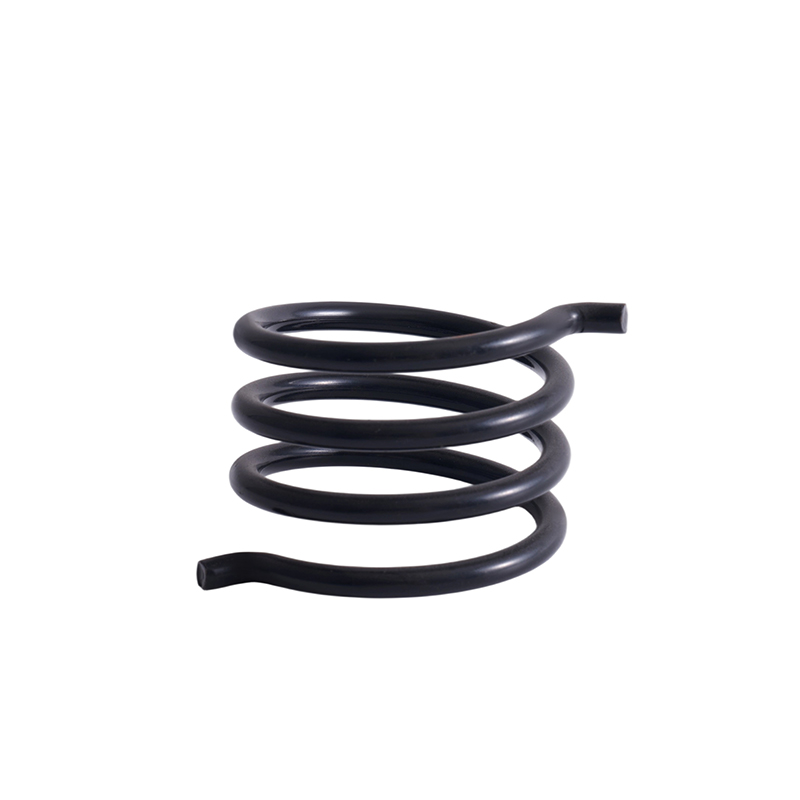
Industry News-Precision motion systems increasingly rely on torsion components with engineered preload geometry. Among them, custom twist angles torsion spring designs are often promoted as a way to improve positioning accuracy, repeatability, and torque consistency. The real engineering answer is more nuanced: accuracy improves only when geometry control, material behavior, and manufacturing tolerance are tightly managed together.
A torsion spring behaves like a torque–angle system where output follows a near-linear relationship in the elastic range, yet practical behavior deviates due to residual stress, coil variation, and arm geometry effects. These deviations become more visible as twist angles become more customized and application-specific.
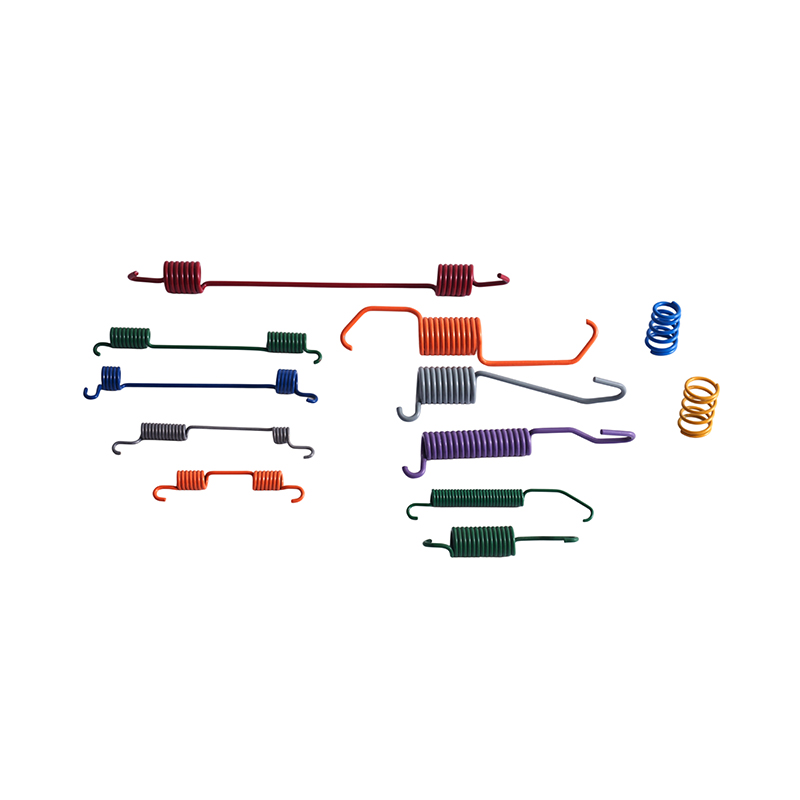
Geometry Control in Custom Twist Angle Design
Angular reference variability
A custom twist angle spring is defined by its free leg position before loading. That “initial system angle” is not purely theoretical; it is influenced by forming method, coil set, and fixture constraints during manufacturing.
Studies on torsion systems highlight that initial angle behavior often deviates from CAD assumptions because real assemblies introduce tilt and frictional constraints at the coil center and mounting rod interface.
Free angle tolerance influence
Free angle variation directly affects positioning accuracy. Industrial production commonly achieves:
- Standard tolerance: ±3° to ±5°
- High precision control: ±2° (process-dependent)
Even small deviations in free angle can shift the entire torque curve without changing spring rate.
Arm geometry sensitivity
Longer legs amplify angular error at the load point. A 1° deviation at the coil may translate into several millimeters of positional offset at the end of a long lever arm, which is why robotics and latch mechanisms are particularly sensitive to twist-angle accuracy.
Why Custom Twist Angle Does Not Guarantee Higher Accuracy
Manufacturing variation still dominates
Even with custom geometry, wire diameter tolerance remains a dominant factor. A variation as small as 0.01–0.02 mm in wire thickness can noticeably change torsional stiffness and torque output consistency.
Material springback behavior
After forming, elastic recovery causes angular shift. This “springback” effect means the final free angle is never identical to the tooling angle unless compensated during CNC coiling.
Residual stress redistribution
Heat treatment stabilizes geometry but cannot eliminate all internal stress differences. These residual stresses cause slight nonlinearities at low-angle deflection regions.
Performance Comparison of Twist Angle Control Levels
| Parameter | Standard Torsion Spring | Custom Twist Angle Spring | Precision-Calibrated Spring |
| Free angle control | Moderate | Higher specification potential | Tight control |
| Torque linearity | Stable | Application-dependent | Highly consistent |
| Manufacturing complexity | Low | Medium–high | High |
| Repeatability | ±5–10% range | ±3–6% range | ±2–4% range |
| Cost impact | Low | Medium | Higher |
Engineering Factors That Improve Angle Accuracy
CNC winding compensation
Modern forming systems intentionally over-rotate during production to offset elastic recovery. This compensation step is essential for achieving stable twist angles in high-volume production.
Heat treatment stabilization
Stress relief at controlled temperatures reduces internal strain gradients:
- Typical range: 175–230°C
- Duration: 20–40 minutes
- Purpose: stabilize free angle and reduce long-term drift
Shot peening effects
Surface compressive stress improves fatigue life and reduces micro-slip at high deflection zones. This indirectly improves angular repeatability over long cycles.
Common Deviation Sources in Real Applications
Mounting misalignment
Even perfectly manufactured springs lose angular accuracy when installed with eccentric or tilted mounting points. This is common in compact hinge assemblies.
Frictional contact at coil body
Contact between coils or guide rods introduces hysteresis, causing return-angle lag between forward and reverse rotation.
Load path inconsistency
Torsion springs do not behave purely as rotational elements; they operate through bending stress in the wire. Any change in load application point modifies the effective torque curve.
Application Scenarios Where Custom Twist Angle Matters
Precision locking mechanisms
Door latches, rotary detents, and indexing systems benefit from predictable angular reset positions.
Automotive actuator systems
HVAC flaps and throttle return systems require consistent angular thresholds for response reliability.
Compact robotics joints
Small servo-assisted systems depend on repeatable angular preload to maintain calibration stability over long duty cycles.
Engineering Interpretation
Custom twist angle torsion springs do not inherently increase accuracy; they increase controllability of geometry, which only translates into better performance when downstream factors are equally controlled.
Key insight:
- Geometry customization improves design freedom
- Manufacturing tolerance determines real accuracy
- Assembly conditions often dominate final performance
A more precise system emerges not from twist angle customization alone, but from the alignment of design intent, material behavior, and production consistency into a single controlled process chain.
Related products
If you are interested in our products, please consult us
CONTACT DETAIL
- Email: helispring@163.com
- Tel: +86-18767775615
- Address: Jinlu Industrial Zone, Beibaixiang Town, Yueqing, Wenzhou City, Zhejiang Province, China.
PRODUCTS
MOBILE TEMERNAL
Wenzhou Heli Spring Manufacturing Co., Ltd. ALL RIGHTS RESERVED.

China Customized Spring Manufacturer