

 English
 русский
 Español
Home / News / Industry News / Are Copper Construction Spring Clips reliable in long-term vibration assemblies
Are Copper Construction Spring Clips reliable in long-term vibration assemblies
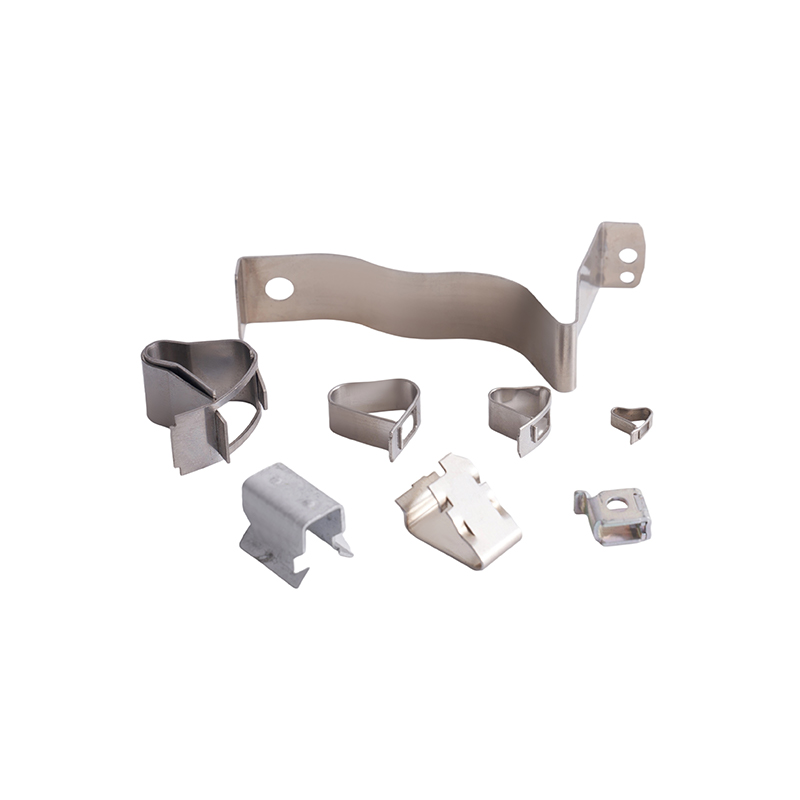
Industry News-Vibration-heavy assemblies push every fastening element into a continuous stress cycle. A Copper Construction Spring Clip is often chosen for conductive pathways, corrosion-prone environments, and compact retention layouts, yet its mechanical behavior under long-term oscillation raises practical engineering questions.
Performance depends not only on geometry but also on metallurgical limits, fatigue thresholds, and the interaction between spring force and repeated dynamic displacement. Research into spring materials shows clear differences between copper-based alloys and traditional spring steels in stiffness, yield strength, and fatigue endurance under cyclic loading conditions.
Mechanical Stability in Vibration Environments
Elastic recovery under cyclic motion
Spring clips operate through controlled elastic deformation, storing and releasing energy during each vibration cycle. A copper-based clip typically offers smoother deformation behavior but lower stiffness compared with carbon steel variants. This reduces peak stress concentration but also limits recovery force over extended cycles.
- Lower modulus effect: copper alloys deform more under identical load, increasing micro-movement during vibration cycles.
- Energy dissipation: higher internal damping reduces sharp stress spikes but may accelerate gradual loosening.
- Contact stability: retention force can fluctuate under high-frequency oscillation.
Material Behavior Compared with Carbon Steel Spiral Clips
Material selection strongly influences long-term reliability. Carbon steel spring components typically achieve higher yield strength and nice fatigue resistance, making them more suitable for continuous vibration systems.
Comparison overview
| Property | Copper-based Spring Clip | Carbon Steel Spiral Compression Spring |
| Yield strength | Moderate to low | High |
| Fatigue resistance | Limited under high cycle vibration | Strong under millions of cycles |
| Electrical conductivity | Excellent | Low |
| Elastic stiffness | Lower | Higher |
Spiral compression designs in carbon steel maintain more stable geometry under repeated loading, while copper clips tend to prioritize conductivity and corrosion resistance over mechanical endurance.
Vibration Fatigue and Micro-Structural Effects
Stress accumulation over cycles
Repeated vibration introduces alternating stress at bend points and contact edges. Over time, localized strain hardening and micro-crack initiation may occur. Copper alloys, while resistant to corrosion, generally show earlier fatigue accumulation under high-frequency loading compared with hardened spring steels.
- Micro-slip zones: small relative movement between contact surfaces increases wear at seating points.
- Creep sensitivity: gradual deformation may appear under constant preload conditions.
- Surface fatigue: repeated bending initiates localized crack propagation.
Design Geometry Influence on Long-Term Performance
Clip shape and load distribution
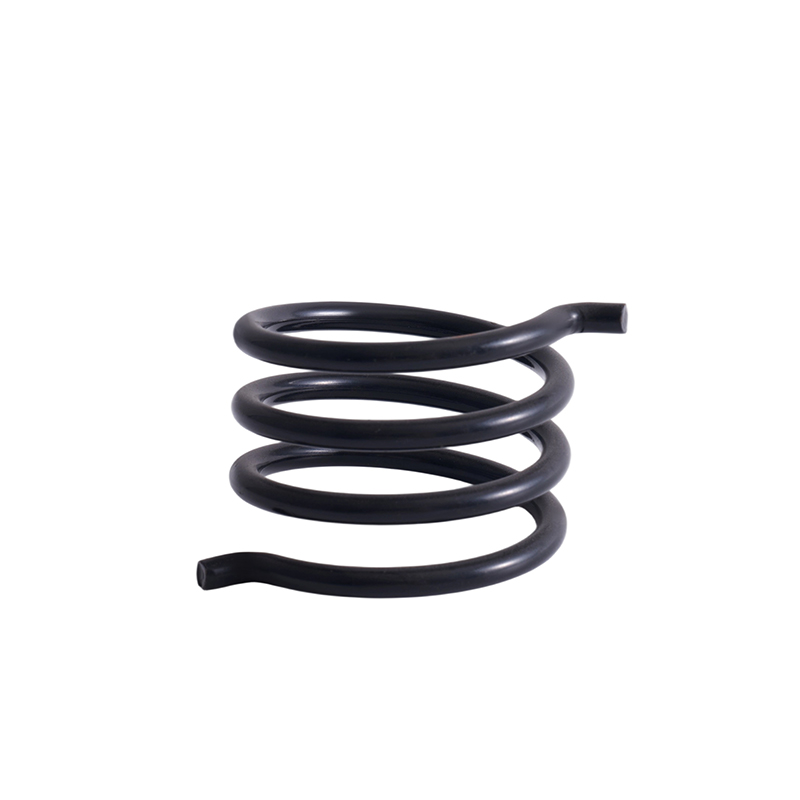
Wire geometry directly affects how vibration energy spreads across the component. Spiral compression or formed wire structures distribute stress more evenly than sharp-bend clip designs, improving durability under oscillation.
- Rounded transitions: reduce stress concentration at bend radii.
- Multi-turn structures: absorb vibration energy across extended length.
- Single-point clips: experience higher localized deformation risk.
Environmental Influence on Copper Construction Spring Clip Behavior
Operating conditions play a decisive role in long-term reliability. Copper alloys naturally resist oxidation and perform well in humid or chemically active environments, which helps maintain surface integrity even under continuous vibration exposure.
However, mechanical fatigue remains independent of corrosion resistance. Even in stable environments, repeated loading cycles gradually reduce elastic recovery capability, especially where preload stress is high.
Engineering Use Scenarios in Vibration Assemblies
Suitable application profiles
- Electrical contact retention systems requiring conductivity and vibration tolerance.
- Light to moderate mechanical assemblies with controlled oscillation levels.
- Corrosive or marine environments where steel degradation risk is higher.
Challenging application profiles
- High-frequency engine or motor mounting systems.
- Heavy-duty industrial conveyors with continuous shock loading.
- Long-cycle fatigue environments requiring optimal spring recovery force.
Reliability Assessment Summary
A Copper Construction Spring Clip can remain functional in long-term vibration assemblies under controlled load conditions, particularly where electrical conductivity and corrosion resistance are prioritized. Mechanical endurance, however, is constrained by lower yield strength and reduced fatigue resistance compared with carbon steel alternatives.
Design decisions typically involve balancing conductivity advantages against structural resilience. Hybrid systems, protective coatings, or reinforced geometries may extend service life, yet cannot fully match high-carbon steel performance in harsh vibration environments.
Long-term vibration reliability is not defined by material choice alone but by how stress, geometry, and environmental exposure interact across millions of cycles. Copper-based spring clips occupy a specialized niche where electrical and corrosion requirements dominate, while carbon steel systems continue to anchor high-load vibration assemblies due to ideal fatigue endurance and elastic stability.
Related products
If you are interested in our products, please consult us
CONTACT DETAIL
- Email: helispring@163.com
- Tel: +86-18767775615
- Address: Jinlu Industrial Zone, Beibaixiang Town, Yueqing, Wenzhou City, Zhejiang Province, China.
PRODUCTS
MOBILE TEMERNAL
Wenzhou Heli Spring Manufacturing Co., Ltd. ALL RIGHTS RESERVED.

China Customized Spring Manufacturer