

 English
 русский
 Español
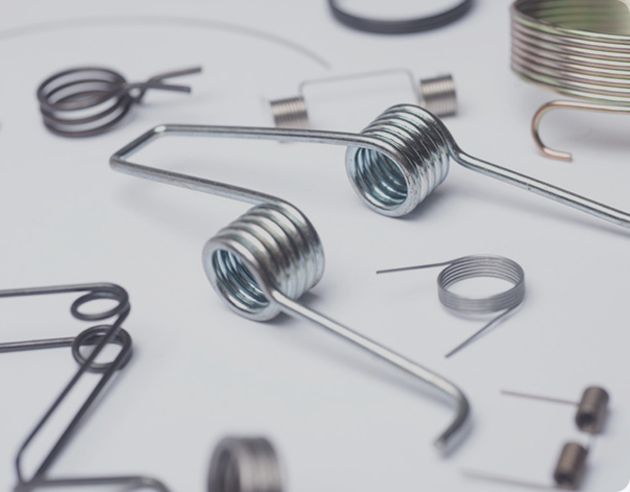
Do Stainless Steel Wire Forming Springs Crack Easily
Industry News-Stainless steel wire forming components are widely used in compact mechanical assemblies where corrosion resistance and consistent elasticity matter. Despite these advantages, concerns around cracking behavior remain common among engineers, especially in high-cycle or tightly bent geometries.
A stainless steel wire forming spring is typically cold-worked into shape, which improves strength but also introduces internal stress. That trade-off is central to understanding why cracking sometimes appears even without obvious overload.
Material Behavior Under Forming Stress
Cold working and stress concentration
Stainless steel grades such as 304 and 316 rely heavily on cold deformation for strength gain. During forming, dislocation density increases, raising tensile strength but reducing local ductility in tight-radius bends.
Research on stainless wire fatigue shows that repeated cyclic loading combined with residual stress can trigger microcrack initiation at the surface, especially at high strain regions near bends or transition points.
Work hardening sensitivity
Austenitic stainless steels exhibit strong work hardening behavior, meaning deformation becomes progressively harder as shaping continues. This can create uneven strain distribution across wire sections, increasing crack susceptibility at localized points.
Surface condition influence
Even minor scratches or tooling marks may act as initiation sites for fatigue cracks. Surface integrity is often more critical than bulk material strength in wire-formed components.
Common Crack Initiation Mechanisms
High-radius bending fatigue
Wire forming springs often operate with repeated elastic deflection. Cracks typically originate at the outer bend radius where tensile stress peaks.
Residual stress accumulation
Coiling and forming processes leave locked-in stress fields. Without proper stress relief, these stresses combine with operational load cycles, accelerating crack growth.
Environmental interaction
Corrosive media can significantly accelerate failure progression. Chloride exposure in particular promotes localized pitting, which then evolves into corrosion fatigue under cyclic loading conditions.
Performance Comparison of Stainless Wire Types
| Property | 304 Stainless Wire | 316 Stainless Wire | 631 Precipitation Hardened |
| Tensile strength | Medium–High | Medium–High | Very High |
| Corrosion resistance | Good | Strong in chloride environments | High |
| Fatigue resistance | Moderate | Moderate–High | High |
| Work hardening rate | Strong | Strong | Controlled |
| Crack sensitivity under bending | Moderate | Lower than 304 | Lower |
Design Factors That Influence Crack Risk
Bend radius ratio
A small bend radius relative to wire diameter significantly increases stress concentration. Industrial practice typically keeps the ratio above 2–3× wire diameter to reduce cracking probability.
Wire diameter selection
Thicker wire increases load capacity but also raises forming stress during fabrication. Thin wire improves flexibility but may suffer from rapid fatigue accumulation in high-cycle use.
Heat treatment control
Stress relief annealing helps reduce residual stress introduced during coiling. Without it, dimensional stability may degrade during long-term cycling.
Typical processing parameters:
- Stress relief temperature: 250–420°C
- Holding time: 30–90 minutes
- Cooling: controlled air cooling
Typical Failure Modes Observed in Field Use
Microcrack propagation
Initial cracks often form at the surface and extend inward along slip bands. These microcracks may remain undetectable until stiffness reduction becomes noticeable.
Intergranular separation
In aggressive environments, grain boundary weakening may accelerate crack propagation, particularly in sensitized stainless grades.
Fatigue fracture progression
Once a crack reaches a critical length, final fracture occurs rapidly under normal operating load, giving the impression of sudden failure.
Engineering Control Measures
Surface finishing optimization
Polishing or electropolishing reduces surface roughness and removes shallow defects that could evolve into cracks.
Controlled forming process
Reducing strain per forming step and using progressive bending sequences helps distribute stress more evenly along the wire.
Material matching to application
Selection between 304, 316, or precipitation-hardened alloys depends heavily on cycle count, temperature exposure, and environmental conditions.
Coating or passivation
Passivation layers reduce corrosion initiation sites, especially in humid or chemically active environments.
Practical Interpretation for Engineers
Cracking in stainless steel wire forming springs is rarely caused by a single factor. It usually results from a combination of:
- Local stress concentration
- Residual forming stress
- Surface imperfections
- Environmental exposure
- High-cycle fatigue loading
The material itself is not inherently fragile; instead, the risk emerges from how geometry, processing, and operating conditions interact.
A stainless wire component behaves more like a stored energy system than a simple elastic element. Once that balance shifts toward localized stress concentration, crack initiation becomes statistically more likely.
Related products

If you are interested in our products, please consult us
CONTACT DETAIL
- Email: helispring@163.com
- Tel: +86-18767775615
- Address: Jinlu Industrial Zone, Beibaixiang Town, Yueqing, Wenzhou City, Zhejiang Province, China.
PRODUCTS
MOBILE TEMERNAL
Wenzhou Heli Spring Manufacturing Co., Ltd. ALL RIGHTS RESERVED.

China Customized Spring Manufacturer