

 English
 русский
 Español
Can Double Helix Torsion Springs Increase Torque Stability
Industry News-The demand for compact motion-control components has pushed engineers to rethink traditional torsion spring geometry. Among the emerging configurations, double helix torsion springs attract attention for their ability to distribute load paths more evenly and reduce localized stress concentration during rotation cycles.
Rather than relying on a single coil system, this structure uses two intertwined helices that share torsional energy. That geometric shift changes how torque is transmitted, stored, and released in mechanical assemblies such as rotary switches, valve actuators, and precision return mechanisms.
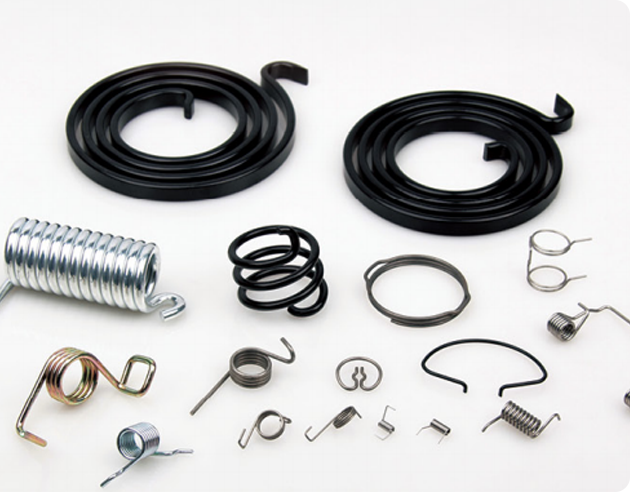
Structural Behavior of Double Helix Design
Dual-path torque distribution
A standard torsion spring channels load through a single wire path. Stress accumulates at the inner radius during angular deflection. A double helix configuration splits that stress into two synchronized coils.
This arrangement reduces peak stress per wire segment and improves angular consistency under repeated cycling.
Coil interaction characteristics
The two helices are typically wound with identical pitch and synchronized direction. Small variations in pitch alignment can affect torque linearity. Engineering studies show that misalignment greater than 3–5° between coils can introduce uneven load sharing and minor hysteresis in return motion.
Key mechanical advantage
Instead of increasing the torque, the structure focuses on stabilizing torque output across repeated cycles, especially under fluctuating angular displacement.
Torque Stability Performance Comparison
| Parameter | Single Helix Torsion Spring | Double Helix Torsion Spring |
| Torque distribution | Concentrated | Split across two coils |
| Stress concentration | Higher inner wire stress | Reduced peak stress |
| Angular repeatability | Moderate under fatigue | Higher stability over cycles |
| Energy storage uniformity | Standard | More balanced release |
| Fatigue resistance behavior | Depends on wire grade | Improved under equal load sharing |
Material and Wire Engineering Factors
Stainless and high-carbon wire options
Most double helix torsion springs use stainless steel wire forming spring techniques or high-carbon steel depending on corrosion exposure and required elastic modulus.
Typical material parameters:
- Stainless steel (302 / 316): tensile strength ~ 520–1900 MPa
- High-carbon music wire: tensile strength ~ 1500–2300 MPa
- Wire diameter range: 0.5 mm to 6.0 mm in industrial applications
Surface finish quality plays a major role. Micro-scratches along the helix can become initiation points for fatigue cracks even under moderate torque cycles.
Wire forming precision
Helix synchronization demands tight dimensional control:
- Coil pitch deviation: ±1–2%
- Free angle tolerance: ±2–4°
- Cross-sectional ovality control: <3%
Even slight inconsistency can shift torque sharing between the two coils.
Failure Modes Observed in Field Applications
Stress redistribution imbalance
Uneven load sharing may occur if one helix experiences slightly higher stiffness. That imbalance gradually increases deformation on one side, eventually affecting torque consistency.
Micro-crack propagation
Industry analysis shows that drawn wire materials can develop longitudinal micro-cracks under repeated torsion cycles. These cracks often remain invisible during early inspection but reduce stiffness over time. Research on torsional spring failure confirms that internal defects and residual stress are major contributors to long-term degradation.
Coil contact and rubbing wear
In compact assemblies, helix proximity may cause contact during peak deflection. This contact creates localized wear points and alters torque response curves.
Design Parameters That Influence Stability
Angular deflection range
Double helix torsion springs perform more consistently within moderate angular ranges:
- Recommended working angle: 30°–270°
- Beyond 300°: risk of nonlinear torque response increases
Wire diameter and spring index
Spring index (C = mean diameter / wire diameter):
- Typical stable range: 4 to 10
- Lower index increases stiffness but raises stress concentration
- Higher index improves flexibility but reduces torque density
Heat treatment control
Stress relief heat treatment between 250°C and 420°C is commonly applied to reduce residual forming stress. Without it, torsional relaxation may occur during long-term static loading.
Application Scenarios Where Double Helix Excels
Precision return mechanisms
Devices requiring repeatable angular return benefit from reduced torque drift.
Automotive actuator systems
Valve control systems and HVAC flaps use compact torsional elements where stability across cycles matters more than peak torque.
Robotics joints
Small robotic assemblies rely on consistent angular feedback. Double helix geometry helps reduce hysteresis during directional reversal.
Engineering Trade-Off Perspective
Double helix torsion springs do not aim to maximize raw torque output. Instead, the design improves energy symmetry, load distribution, and cyclic stability.
However, complexity introduces constraints:
- Higher manufacturing precision requirement
- More sensitive to alignment errors
- Slightly higher production cost
- Limited benefit in low-cycle applications
These trade-offs make the design more suitable for controlled mechanical environments rather than general-purpose spring replacement.
A double helix structure represents a shift from “stronger spring” thinking toward “controlled torque behavior” engineering. As precision systems continue to evolve, this geometry offers a practical path to improving rotational consistency without increasing overall size or material volume.
Related products
If you are interested in our products, please consult us
CONTACT DETAIL
- Email: helispring@163.com
- Tel: +86-18767775615
- Address: Jinlu Industrial Zone, Beibaixiang Town, Yueqing, Wenzhou City, Zhejiang Province, China.
PRODUCTS
MOBILE TEMERNAL
Wenzhou Heli Spring Manufacturing Co., Ltd. ALL RIGHTS RESERVED.

China Customized Spring Manufacturer