

 English
 русский
 Español
What Makes Tension Springs Handle Heavy Loads
Industry News-Heavy-duty mechanical systems often require springs that can absorb pulling forces while maintaining stable performance during repeated operation. From automotive assemblies and industrial equipment to agricultural machinery and precision mechanisms, tension springs must deliver reliable extension force without losing their original shape. A High Tensile Strength Carbon Steel Tension Spring achieves this capability through the combination of strong spring materials, optimized coil structures, and controlled manufacturing processes.
Unlike compression springs that work by being pushed together, tension springs operate through pulling forces. Their coils are usually tightly wound with initial tension between each coil, allowing the spring to resist stretching and provide a restoring force after extension. Steel spring materials are widely used because their chemical composition, mechanical properties, and surface quality directly influence load capacity and fatigue behavior.
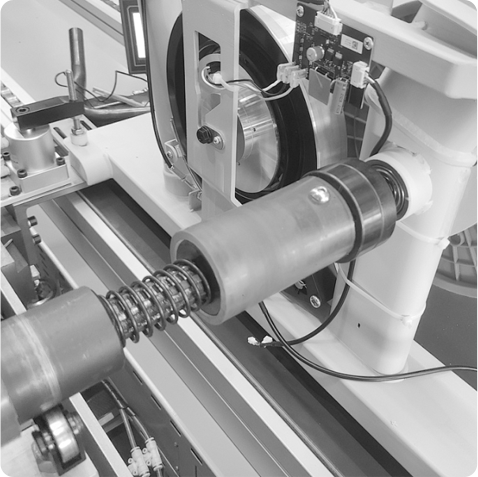
The Material Strength Behind Heavy Load Performance
The ability of a tension spring to handle demanding loads begins with the properties of carbon steel wire. High carbon spring steels are processed to achieve strong tensile capability, allowing the spring to withstand greater pulling forces before permanent deformation occurs.
- High tensile strength: Carbon steel wire provides strong resistance against stretching forces during operation.
- Good elastic recovery: The material can return to its original shape after the applied load is removed.
- Fatigue resistance: Properly processed spring wire can support repeated loading cycles.
- Dimensional stability: Consistent wire properties help maintain predictable spring behavior.
Common materials used for high-strength tension springs include music wire, hard-drawn carbon steel wire, and oil-tempered spring wire. These materials are selected according to required load, operating environment, and cycle frequency.
Typical Material Characteristics of Carbon Steel Tension Springs
| Material Feature | Influence on Spring Performance |
| High Carbon Content | Improves hardness and strength after suitable processing |
| Cold Drawn Wire Structure | Enhances tensile capability and dimensional consistency |
| Heat Treatment | Balances strength, toughness, and elastic response |
| Surface Quality | Helps reduce stress points during repeated stretching |
How Spring Geometry Supports Heavy Loads
Material strength alone does not determine how much load a tension spring can handle. The geometry of the spring body, hook design, wire diameter, and coil arrangement all influence the final performance.
A High Tensile Strength Carbon Steel Tension Spring is engineered around several important structural factors:
- Wire diameter: A larger wire diameter generally increases resistance against deformation and improves load capability.
- Coil diameter: The relationship between coil diameter and wire size affects spring flexibility and stress distribution.
- Number of coils: Active coil quantity influences extension distance and spring rate.
- Hook configuration: Hook shape affects connection strength and stress concentration areas.
Spring design requires balancing strength and movement. A spring with excessive stiffness may not provide enough travel distance, while a softer design may fail to produce the required pulling force. Engineers evaluate these factors together to achieve suitable working performance.
Why Hook Design Matters in Heavy Duty Tension Springs
The hooks or loops at both ends of a tension spring connect the component to surrounding mechanical parts. These areas experience complex forces because they combine bending and torsional stress.
Many spring failures occur around hook areas because the stress distribution is different from the coil body. Careful hook forming, proper radius control, and accurate positioning help improve reliability under heavy loads.
Common Hook Designs and Their Applications
| Hook Type | Application Characteristics |
| Machine Hook | Suitable for compact assemblies requiring accurate positioning |
| Cross Over Hook | Provides strong connection points for industrial mechanisms |
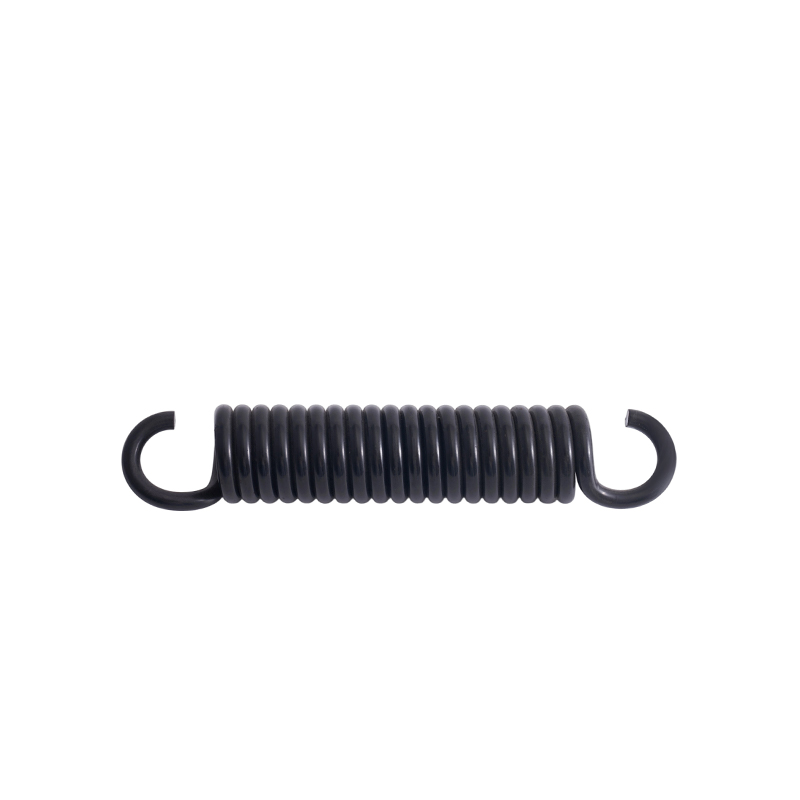
| Extended Hook | Allows additional installation space and flexible mounting |
| Custom Loop Design | Used for specialized equipment with unique connection requirements |
The Role of Initial Tension in Load Handling
One special characteristic of tension springs is initial tension. The coils are usually wound tightly together so that a certain amount of force is required before the coils begin to separate.
This feature allows a tension spring to maintain a pulling force even before reaching its working extension. The initial tension value depends on material strength, winding method, spring index, and manufacturing accuracy. High tensile materials are particularly suitable for maintaining this internal force during operation.
- Low initial tension: Provides easier extension with lower starting force.
- Medium initial tension: Offers a balance between movement and holding force.
- High initial tension: Supports applications requiring strong resistance against pulling forces.
Applications Requiring High Strength Tension Springs
The combination of strength and flexibility makes carbon steel tension springs suitable for many mechanical systems. Their ability to store energy and return force makes them valuable in applications where components need controlled movement.
- Automotive systems: Used in throttle mechanisms, doors, suspension-related components, and mechanical controls.
- Industrial machinery: Supports clamps, safety mechanisms, and moving equipment parts.
- Agricultural equipment: Handles repeated pulling actions in outdoor machinery.
- Commercial products: Provides controlled movement in tools and mechanical devices.
Manufacturing Processes That Improve Spring Reliability
A reliable tension spring requires more than strong raw material. Production steps such as precision coiling, stress relieving, surface inspection, and load testing influence the final product quality.
Important Production Considerations
- Precision winding: Maintains accurate coil dimensions and consistent spring behavior.
- Stress relieving: Helps stabilize the spring after forming.
- Load testing: Confirms extension force meets design requirements.
- Surface inspection: Detects possible defects that may affect fatigue performance.
Factors Engineers Consider Before Using Carbon Steel Tension Springs
A suitable tension spring design depends on the working environment and mechanical requirements. Engineers usually evaluate several parameters before finalizing spring specifications.
- Required extension force and working load.
- Available installation space and mounting structure.
- Operating temperature and exposure conditions.
- Expected number of working cycles.
- Required corrosion protection or surface treatment.
A High Tensile Strength Carbon Steel Tension Spring handles heavy loads because of the combined effect of strong spring materials, carefully designed geometry, and controlled manufacturing methods. The carbon steel wire provides the mechanical foundation, while coil design and hook structure determine how effectively the spring transfers pulling force.
From industrial machinery to automotive systems, tension springs continue to provide dependable mechanical support where repeated extension and load control are required. Understanding the relationship between material strength, spring structure, and working conditions helps engineers create spring solutions that match demanding applications.
Related products
If you are interested in our products, please consult us
CONTACT DETAIL
- Email: helispring@163.com
- Tel: +86-18767775615
- Address: Jinlu Industrial Zone, Beibaixiang Town, Yueqing, Wenzhou City, Zhejiang Province, China.
PRODUCTS
MOBILE TEMERNAL
Wenzhou Heli Spring Manufacturing Co., Ltd. ALL RIGHTS RESERVED.

China Customized Spring Manufacturer