

 English
 русский
 Español
Can Precision Wound Springs Maintain Elastic Force
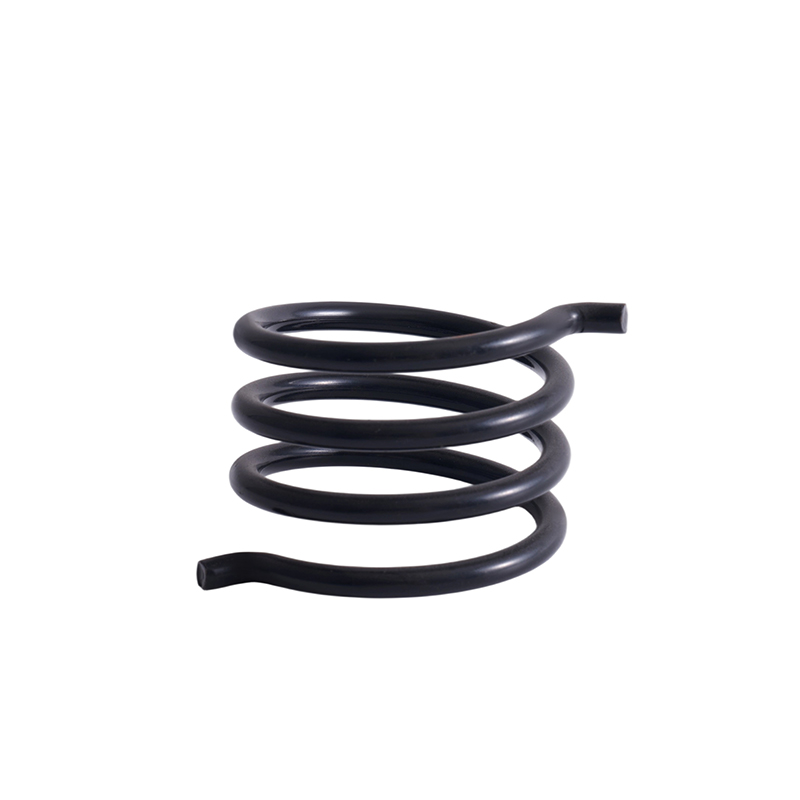
Industry News-Maintaining stable elastic force is a key requirement for many mechanical systems that rely on repeated movement, accurate positioning, and controlled tension. From medical instruments and electronic devices to automotive assemblies and industrial mechanisms, springs must deliver predictable force throughout their working cycle. A High Elasticity Precision Wound Tension Spring is designed to achieve this goal through accurate winding technology, suitable material selection, and carefully controlled spring geometry.
Precision winding directly affects how a tension spring stores and releases energy. During operation, the spring wire experiences torsional stress as the coils separate under pulling force. Proper design helps maintain elastic behavior within the working range, allowing the spring to return to its original shape after the load is removed. Tension spring performance is commonly related to parameters such as wire diameter, coil diameter, active coils, and initial tension.
The Science Behind Elastic Force Retention
Elastic force comes from the ability of spring material to deform temporarily and recover without permanent shape changes. A precision wound tension spring works within the elastic limit of the material, storing mechanical energy during extension and releasing it during recovery.
- Material elasticity: High-quality spring wire provides the ability to repeatedly absorb and release energy.
- Controlled winding: Accurate coil formation helps maintain consistent force output.
- Stress balance: Proper manufacturing reduces uneven stress areas that may affect long-term performance.
- Dimensional stability: Precise geometry supports predictable extension behavior.
The relationship between applied force and extension is influenced by spring stiffness. A well-designed tension spring follows a predictable force-displacement relationship, allowing engineers to calculate the required pulling force for specific applications.
Main Factors Affecting Elastic Force Stability
| Design Factor | Influence on Elastic Performance |
| Wire Diameter | Controls spring strength, stiffness, and load capacity |
| Coil Diameter | Affects flexibility and stress distribution during extension |
| Active Coil Number | Changes extension distance and spring response |
| Initial Tension | Determines the starting force required to separate coils |
| Material Grade | Impacts fatigue resistance and recovery ability |
How Precision Winding Improves Spring Performance
The winding process determines the final structure of a tension spring. Small variations in coil spacing, wire positioning, or hook alignment may influence force consistency. Precision winding equipment helps control these details and improves repeatability between individual springs.
A High Elasticity Precision Wound Tension Spring typically uses automated forming systems to achieve accurate dimensions. These machines regulate wire feeding speed, bending angles, and coil formation, creating springs with consistent mechanical characteristics.
- Accurate coil pitch: Helps maintain uniform extension behavior.
- Stable hook positioning: Supports reliable installation and load transfer.
- Consistent spring dimensions: Allows better compatibility with precision assemblies.
Why Material Choice Matters for High Elasticity Springs
The wire material determines how well a spring can maintain its elastic characteristics after repeated use. Common materials include carbon steel spring wire, stainless steel, and alloy spring materials. Each option provides different advantages depending on mechanical requirements and working conditions.
| Spring Material | Performance Characteristics | Typical Uses |
| Carbon Steel Wire | High strength, good elasticity, cost-effective performance | Industrial equipment, automotive components |
| Stainless Steel Wire | Corrosion resistance and stable mechanical behavior | Medical devices, outdoor equipment, electronics |
| Alloy Spring Steel | Enhanced strength and fatigue resistance | Heavy-duty mechanical systems |
Material processing also influences spring performance. Heat treatment, surface finishing, and stress control methods help optimize the balance between strength and flexibility.
How Initial Tension Helps Maintain Working Force
Tension springs have a unique characteristic called initial tension. The coils remain tightly closed before the spring is stretched, creating a preload force that keeps the spring compact while providing immediate resistance during extension.
The initial tension value depends on wire size, material properties, winding method, and spring design. A properly controlled initial tension allows the spring to deliver stable force from the beginning of movement.
- Low initial tension: Suitable for applications requiring easy movement and lower starting force.
- Medium initial tension: Provides balanced movement and holding force.
- High initial tension: Used where strong resistance is required at the beginning of extension.
Applications Requiring Consistent Elastic Force
Precision wound tension springs are widely used where small size and accurate force control are important. Their ability to provide repeatable tension makes them suitable for many industries.
- Medical equipment: Provides controlled movement in compact instruments and devices.
- Automotive systems: Supports mechanical adjustment and return functions.
- Electronic products: Maintains reliable contact pressure in small mechanisms.
- Industrial machinery: Provides repeated pulling force in operating components.
Manufacturing Details That Influence Long-Term Elasticity
A spring’s ability to maintain elastic force depends on the entire manufacturing process rather than a single production step. Precision control helps reduce variations that may affect working performance.
Important Manufacturing Processes
- Wire preparation: Ensures the spring material has suitable surface quality and mechanical properties.
- Precision coiling: Creates accurate spring geometry and stable dimensions.
- Stress relieving: Helps reduce internal stress after forming.
- Load testing: Verifies extension force and mechanical consistency.
Design Considerations for Precision Tension Springs
Engineers need to evaluate several conditions before applying a high elasticity tension spring to a mechanical system. A suitable design should match the required force, available space, operating frequency, and environmental conditions.
- Required extension distance and working load.
- Maximum allowable stress during operation.
- Expected number of operating cycles.
- Temperature and environmental exposure.
- Connection method and hook structure.
A High Elasticity Precision Wound Tension Spring can maintain elastic force through the combined effects of accurate winding, appropriate material properties, and optimized structural design. Precision manufacturing ensures that each coil, hook, and wire section contributes to stable spring behavior.
As mechanical systems continue to require smaller components with reliable force control, precision wound tension springs remain an important solution for applications where consistent movement and long-term elasticity are essential.
Related products
If you are interested in our products, please consult us
CONTACT DETAIL
- Email: helispring@163.com
- Tel: +86-18767775615
- Address: Jinlu Industrial Zone, Beibaixiang Town, Yueqing, Wenzhou City, Zhejiang Province, China.
PRODUCTS
MOBILE TEMERNAL
Wenzhou Heli Spring Manufacturing Co., Ltd. ALL RIGHTS RESERVED.

China Customized Spring Manufacturer