

 English
 русский
 Español
What are heavy duty torsion springs and how do they work?
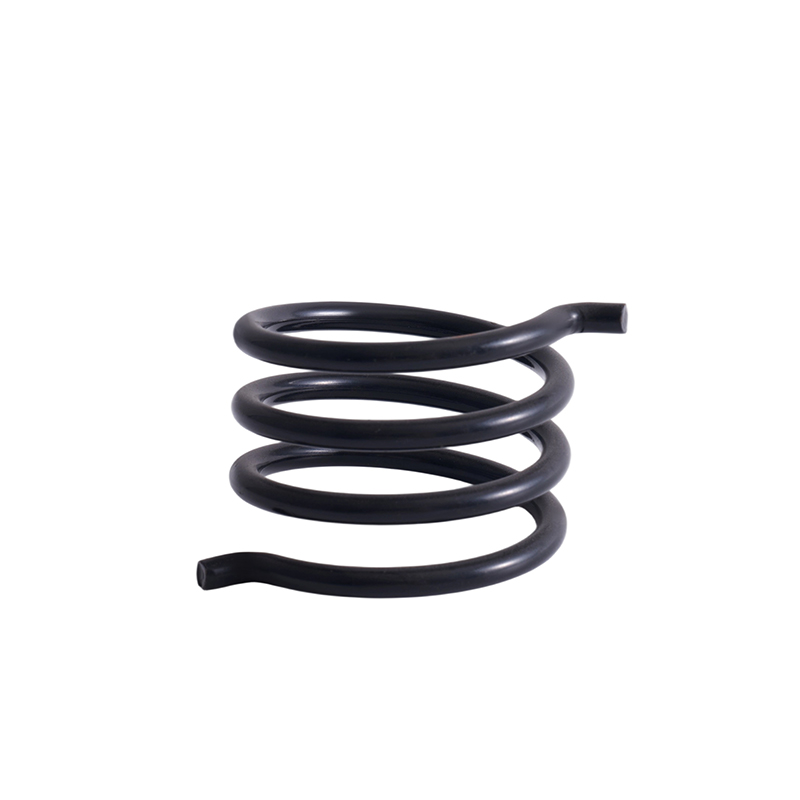
Industry News-Heavy duty torsion springs operate by resisting angular displacement. When a force is applied to the ends (legs) of the spring, it creates torque, causing the coils to twist. Once the force is removed, the spring returns toward its original position, releasing stored energy.
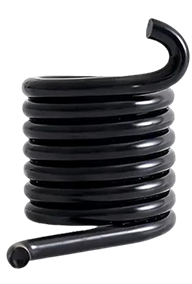
Key structural elements include:
- Coils: The helical body that stores energy
- Legs or arms: Extensions that transmit force
- Inside diameter: Determines fit over a shaft or rod
- Wire diameter: Influences strength and stiffness
These springs are typically mounted on a shaft and are often used in pairs to balance loads. The direction of winding (left-hand or right-hand) is critical, as it determines how the spring responds under torque.
How do you select the right heavy duty torsion spring?
Choosing an appropriate torsion spring requires attention to mechanical and environmental factors. Improper selection may lead to reduced service life or mechanical failure.
Important considerations include:
Torque requirements
The spring must provide sufficient rotational force for the application without exceeding material limits.
Angular deflection
The expected rotation angle should fall within the spring’s design range to prevent overstressing.
Material type
Common materials include music wire, oil-tempered wire, and stainless steel, each suited for different environments.
Operating environment
Exposure to moisture, chemicals, or temperature variations can influence material performance.
Cycle life
Applications involving repeated motion require springs designed for fatigue resistance.
Summarizes common selection factors and their implications:
|
Factor |
Description |
Impact on Performance |
|
Wire Diameter |
Thickness of the spring wire |
Affects strength and stiffness |
|
Coil Diameter |
Diameter of the spring body |
Influences torque capacity |
|
Number of Turns |
Total active coils |
Determines flexibility and stress |
|
Material |
Type of metal used |
Affects durability and corrosion resistance |
|
Surface Treatment |
Coatings or finishes |
Improves wear and environmental resistance |
What are common applications of heavy duty torsion springs?
Heavy duty torsion springs are widely used in systems requiring controlled rotational force and reliable return motion. Their applications span multiple industries.
Typical uses include:
Garage doors
These springs counterbalance the weight of the door, making it easier to open and close manually or with a motor.
Industrial machinery
They are used in hinges, clamps, and rotating assemblies to provide controlled movement.
Agricultural equipment
Torsion springs assist in mechanisms such as gates, levers, and adjustable components.
Automotive systems
Applications include trunk lids, seat mechanisms, and linkage systems.
Construction tools
They are used in devices requiring repeated rotational motion, such as certain hand tools and lifting mechanisms.
These applications often involve high loads and repeated cycles, which is why heavy duty torsion springs are designed with reinforced materials and precise tolerances.
What maintenance and installation practices should be followed?
Proper installation and maintenance are necessary to ensure consistent performance and reduce the likelihood of failure. Since torsion springs operate under stored energy, handling them requires care.
Practices include:
Correct alignment
Ensure the spring is mounted securely on the shaft with proper positioning of the legs.
Avoid over-twisting
Exceeding the designed angular deflection can cause permanent deformation or fracture.
Regular inspection
Check for signs of wear such as cracks, corrosion, or loss of elasticity.
Lubrication
In some cases, applying a suitable lubricant can reduce friction and wear between coils.
Use of safety tools
Installation often requires specialized tools to control stored energy and prevent injury.
Additionally, environmental exposure should be monitored. For example, springs used outdoors may require protective coatings to reduce corrosion risk.
Related products
If you are interested in our products, please consult us
CONTACT DETAIL
- Email: helispring@163.com
- Tel: +86-18767775615
- Address: Jinlu Industrial Zone, Beibaixiang Town, Yueqing, Wenzhou City, Zhejiang Province, China.
PRODUCTS
MOBILE TEMERNAL
Wenzhou Heli Spring Manufacturing Co., Ltd. ALL RIGHTS RESERVED.

China Customized Spring Manufacturer