

 English
 русский
 Español
What Is The Difference Between Helical Spring And Compression Spring
Industry News-Springs are one of those parts that usually stay out of sight, but they end up doing a lot of quiet work inside machines. When something moves, presses, or returns to position, there is often a spring behind it keeping things from feeling too harsh or too loose. You do not really notice them until the movement starts to feel off.
Helical spring and compression spring are often talked about in the same breath because they look almost alike at first. Both are made from coiled wire, both rely on bending and recovery, and both deal with force in a very physical way. But once they are actually installed into equipment, the behavior is not the same anymore. The way they react depends on how the force is applied and what the system expects from them.
In some industrial supply and manufacturing discussions, Wenzhou Heli Spring Manufacturing Co., Ltd. may be mentioned when talking about spring forming and use cases. In real practice though, engineers and users care more about how the spring behaves after months or years of repeated movement than about how it is labeled.
At a glance, people sometimes assume a helical spring is just another name for a compression spring. That assumption usually changes once the part is put under load. The movement, resistance, and recovery start to show small differences that matter more than appearance
How Springs Actually Work In Simple Terms
A spring is basically a piece of metal that bends when force is applied and goes back when the force is gone. That sounds simple, but inside a machine, this simple behavior is doing a lot of work. It keeps parts from hitting too hard, helps control motion, and absorbs small shocks that would otherwise transfer directly into the structure.
Without springs, many systems would feel stiff or noisy. Movement would be more abrupt. So even though the part is small, its role is tied closely to how smooth a mechanism feels during use.
What changes between different spring types is not the idea itself, but the direction, shape, and way the force is handled.
What A helical spring Feels Like In Use
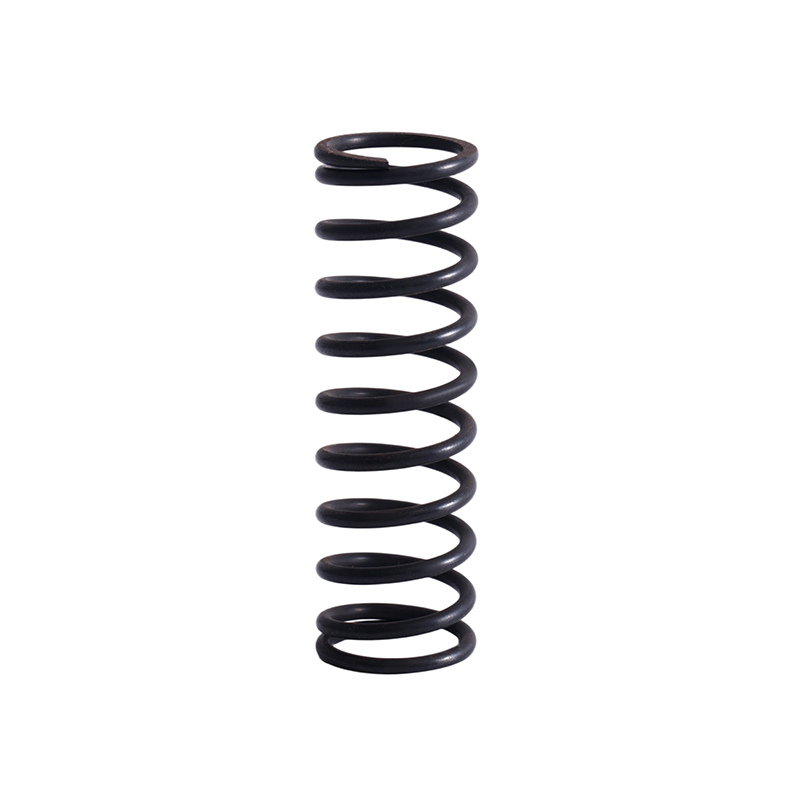
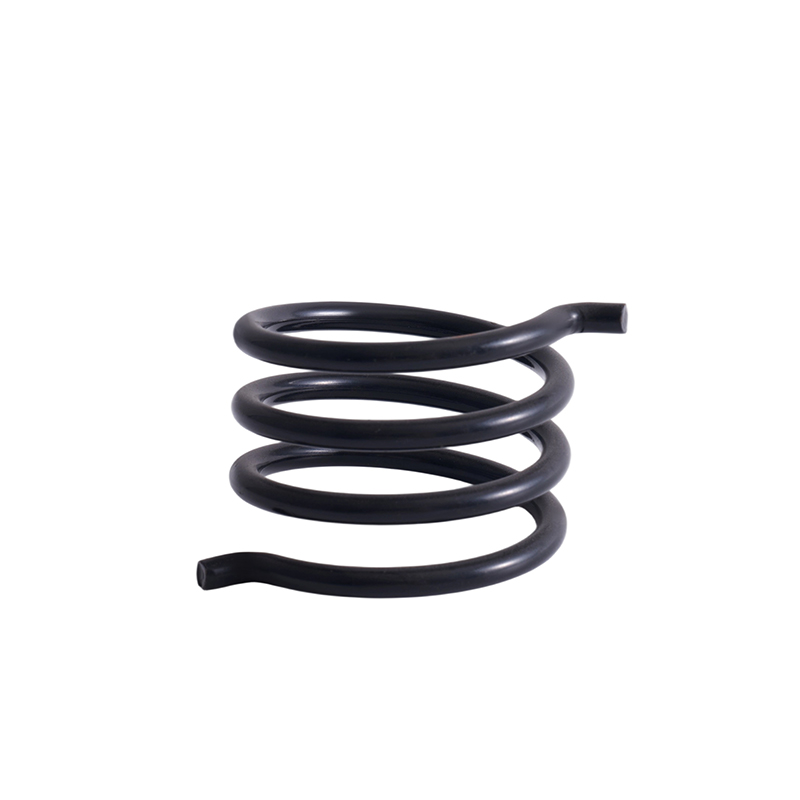
A helical spring is made by winding wire into a continuous spiral. It looks like a simple coil, but that shape allows it to react in more than one way depending on how it is placed.
In some setups, it gets compressed. In others, it may be used where movement shifts slightly during operation. The coil shape gives it a bit of flexibility in how force is taken in and released.
It does not always behave in a single fixed direction. That is part of why it shows up in different kinds of mechanical layouts where space and movement are not always perfectly straight.
What A compression spring Feels Like In Use
A compression spring is more focused in how it works. It is designed to take force straight along its center line. When pressure comes in, it shortens. When the pressure is removed, it pushes back to its original length.
There is not much variation in how it moves. The behavior is direct and easy to predict. Because of that, it is often used in places where repeated pushing or pressing happens in a controlled way.
Even though it also uses a coil shape, the intention behind it is more specific: handle compression in a steady and repeatable way.
Structural Differences Between helical spring And compression spring
Coil Shape And How It Affects Movement
Both springs are coiled, but the details of that coil matter more than it looks. The spacing between turns, the way the ends are shaped, and how tight the winding is all influence how force travels through the part.
A helical spring can be arranged in ways that allow slightly more variation in movement depending on the system it is placed in. A compression spring usually stays closer to a structure that supports straight compression.
These are not dramatic visual differences, but they change how the spring behaves once it is working.
Direction Of Force In Real Use
compression spring works when force comes straight down its axis. It is pushed, it compresses, then it returns. That cycle repeats in a very clear path.
helical spring does not always stay in that same strict condition. It can still compress, but depending on design and placement, it may also handle movement that is not perfectly linear.
So the key difference is not just strength, but how restricted or flexible the force direction is.
How Load Feels Inside The Spring
When a spring is under load, the wire inside is bending and storing energy. In a compression spring, that load is usually spread along a consistent path. It feels more controlled in one direction.
In a helical spring, the load behavior can feel slightly more distributed depending on how it is used. It is still doing the same basic job, but the way stress moves through the coil can vary with setup.
| Aspect | Helical Spring | Compression Spring |
|---|---|---|
| Shape | Coiled wire structure | Coiled wire structure |
| Main Movement | Depends on setup | Straight compression |
| Force Direction | Can vary slightly | Mainly axial |
| Behavior | More flexible use cases | More fixed response |
| Typical Feel | Adaptable movement | Direct push and return |
How They Store And Release Energy
Both types work by storing energy when they are deformed and releasing it when the force is removed. That part is the same.
The difference shows up in how smooth or controlled that cycle feels in real operation. A compression spring usually gives a more straightforward push-back motion. A helical spring can feel a bit more adaptable depending on how it is installed.
How They Handle Repeated Load
In real machines, springs are not used once. They go through repeated cycles of pressure and release. Over time, how they respond to that repetition becomes important.
compression spring is often placed where that repetition is very direct and predictable. helical spring can appear in systems where movement conditions are slightly less uniform.
Vibration And Small Impact Control
Springs also help reduce vibration and soften small impacts. compression spring usually deals with direct force coming from one direction. It absorbs and returns that energy in a controlled way.
helical spring can help smooth out movement in setups where motion is not perfectly steady. It reacts to changes in force in a slightly more adaptable way, depending on the system it is part of.
How They React During Continuous Movement
When a machine runs for a long time, springs are rarely sitting still. They are constantly being pushed, released, or slightly adjusted by surrounding parts. This is where differences between helical spring and compression spring become more noticeable.
A compression spring tends to follow a very clear pattern. Push comes in, spring shortens, force is stored, then it pushes back. Even after many cycles, the movement pattern usually stays easy to predict as long as it is within normal working conditions.
A helical spring, depending on how it is installed, may feel a bit less rigid in its behavior pattern. It can still work under compression, but in some setups the movement path is not always perfectly straight. That small variation is not about weakness, but about how the structure allows different directions of response.
When Force Is Not Even Or Constant
Not every system applies force in a smooth way. Some machines apply pressure in short bursts, some in uneven cycles, and some with small shifts in direction.
In those situations, compression spring still performs in a fairly direct way, but the load is always handled along its axis. If the force is slightly off-center, it may still work, but the behavior is more sensitive to alignment.
helical spring can tolerate a bit more variation in how force is introduced, mainly because the coil structure distributes stress across the winding pattern. It does not change the basic physics, but the way the load spreads can feel less strict in certain installations.
Small Differences In Recovery Behavior
After being compressed, both springs return to their original shape. But in real systems, the way that return happens can feel slightly different.
compression spring usually returns in a straightforward motion. It pushes back along the same line it was compressed. This makes it useful in systems where timing and position need to stay consistent.
helical spring may show a similar recovery, but depending on how it is installed, the return motion can interact with surrounding parts in a slightly different way. It is still elastic recovery, just not always isolated in a single direction of movement.
Material And Manufacturing Considerations
Wire Behavior And Elastic Response
Both helical spring and compression spring are made from metal wire that is shaped into coils. The material choice influences how much force the spring can take before it starts to lose its original behavior.
What matters is not only strength, but also how the wire responds to repeated bending. Every compression cycle bends the wire slightly, and over time this repeated stress defines how stable the spring feels in use.
Forming Process And Coil Stability
During production, the wire is wound into a spiral shape. The consistency of this winding affects how evenly force is distributed.
If the coil spacing is uneven, the spring may not respond smoothly under load. If the coil is consistent, the movement feels more controlled.
compression spring usually follows a more uniform coil arrangement because its movement is more linear. helical spring may vary slightly depending on application needs, but stability of winding still plays a key role in performance.
How Long Term Use Changes Behavior
Springs do not usually fail suddenly. The change is slow. At first, it may feel almost the same. Over time, small differences start to appear.
These changes can include:
- Slight reduction in return force
- More noticeable compression under same load
- Small delays in recovery movement
- Change in how force feels during repeated cycles
compression spring often shows these changes in a more direct way because of its axial working nature. helical spring may show similar changes, but sometimes the effect is distributed across different parts of the coil.
Real World Usage Differences
Where compression spring Feels More Natural
compression spring is often used in systems where movement is very clear and straight. The force comes in one direction, and the response needs to be consistent every time.
Typical use conditions include repeated pressing, controlled return, and stable positioning under load. The simplicity of movement makes it easier to predict in design.
Where helical spring Fits More Flexibly
helical spring can be used in situations where space is limited or where movement is not strictly linear. The coil structure allows it to adapt to slightly different installation angles or movement paths.
It is not about doing a different job, but about handling variations in how that job is applied.
When They Work In Similar Systems
In many mechanical systems, both types may appear in different roles. One may handle direct compression, while the other supports secondary movement or stabilization.
They are not always competing options. In practice, they often exist in the same environment but serve slightly different mechanical purposes.
| Situation | Helical Spring Behavior | Compression Spring Behavior |
|---|---|---|
| Straight line pressing | Works with flexible response | Very direct compression cycle |
| Repeated load cycles | Adaptable under variation | Stable axial repetition |
| Slight misalignment | More tolerant in some setups | More sensitive to alignment |
| Space limited design | Easier to adapt placement | Needs clearer axial space |
| Motion consistency need | Depends on installation | More predictable return |
Looking at both helical spring and compression spring side by side, the difference is not only about shape but about how each one behaves when force is applied again and again in real systems. The coil form is shared, but the working pattern changes depending on direction, structure, and installation conditions.
Related products
If you are interested in our products, please consult us
CONTACT DETAIL
- Email: helispring@163.com
- Tel: +86-18767775615
- Address: Jinlu Industrial Zone, Beibaixiang Town, Yueqing, Wenzhou City, Zhejiang Province, China.
PRODUCTS
MOBILE TEMERNAL
Wenzhou Heli Spring Manufacturing Co., Ltd. ALL RIGHTS RESERVED.

China Customized Spring Manufacturer