

 English
 русский
 Español
Metric Spring Tolerances: What Should Buyers Include in an RFQ
Industry News-Dimensional accuracy is an important consideration in compression spring procurement, particularly for assemblies with limited installation space and defined load requirements. A difference of only a few tenths of a millimeter may affect spring positioning, compression travel, or contact with surrounding components. Buyers working with international manufacturers also need consistent metric measurements and clearly documented acceptance criteria.
At Heli Spring, we support OEM and ODM projects involving metric compression springs for automotive components, industrial machinery, electrical equipment, and other mechanical applications. A detailed Request for Quotation (RFQ) helps our engineering team understand the required dimensions, performance conditions, and inspection expectations before preparing a manufacturing proposal.
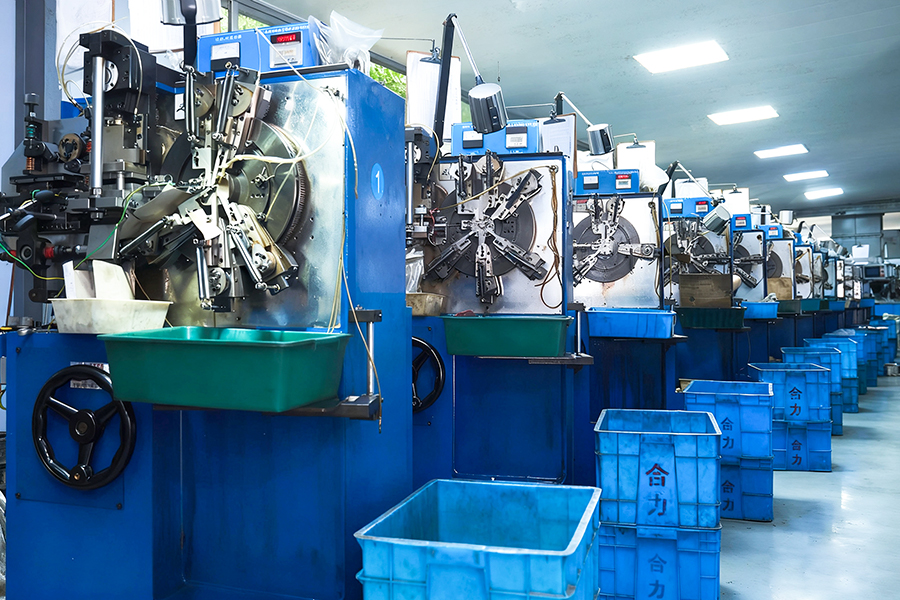
1. Specify All Critical Dimensions in Millimeters
Metric drawings should use millimeters (mm) consistently. Mixing metric and imperial measurements can create misunderstandings during drawing reviews and quality inspections.
We recommend including these dimensional parameters in the RFQ:
- Wire Diameter (d): Determines an important part of the spring's stiffness and load capacity.
- Outside Diameter (OD): Defines the external space required for installation.
- Inside Diameter (ID): Determines clearance around a guide rod or internal component.
- Free Length (L0): Measures the spring's unloaded length.
- Solid Height: Describes the approximate compressed height with all coils in contact.
- Coil Count: Identifies total coils and active coils where these values are specified.
Buyers should distinguish between critical dimensions and reference dimensions. Critical dimensions directly affect assembly compatibility, while reference dimensions provide supplementary design information.
2. Define Tolerance Requirements Separately
A complete RFQ should not simply state that all dimensions require high precision. Different spring characteristics may need different tolerance limits according to their functions.
| Parameter | What Buyers Should Specify | Why It Matters |
| Wire Diameter | Nominal value and allowable deviation | Affects spring stiffness and mechanical strength. |
| Outside Diameter | Upper and lower dimensional limits | Prevents interference with the housing. |
| Free Length | Nominal length and tolerance | Influences installed position and preload. |
| Squareness | Permitted angular deviation | Supports stable contact with bearing surfaces. |
| Spring Load | Force tolerance at a specified height | Controls functional consistency. |
| Spring Rate | Required rate and allowable variation | Defines force changes during compression. |
At Heli Spring, we recommend discussing tighter tolerances only for dimensions that influence the customer's assembly or operating performance. This approach provides clearer manufacturing targets and avoids unnecessary inspection requirements.
3. Include Load Testing Conditions in the RFQ
Dimensional compliance alone cannot establish whether a compression spring performs correctly. Load testing requires a defined measurement height and compression condition.
For example, a buyer may specify a spring that must generate 20 N at a compressed height of 25 mm. The RFQ should also state the permitted force deviation and testing method.
Useful performance information
- Required force at one or more working heights.
- Spring rate, expressed in N/mm.
- Maximum working compression and allowable travel.
- Expected operating cycles and loading frequency.
- Testing conditions and measurement equipment requirements.
Our engineering team can review these parameters alongside wire diameter, coil geometry, and material specifications to assess the proposed spring design.
4. Identify Applicable Standards and Inspection Documents
International buyers may work with ISO, EN, DIN, or customer-specific engineering standards. However, a standard should only be referenced after confirming that its scope matches the spring design.
For example, ISO 11891 addresses hot-formed helical compression springs manufactured from round-section steel bars. It covers technical specifications, tolerances, and test methods within its defined scope. It should not automatically be treated as a universal tolerance standard for every cold-coiled compression spring.
We recommend specifying the following documentation requirements:
- Approved engineering drawings with revision numbers.
- Material certificates, where required.
- Dimensional inspection reports.
- Load and spring rate test results.
- Surface treatment and corrosion inspection requirements.
5. Prepare a Practical RFQ Checklist
Before sending an inquiry to Heli Spring, buyers can use the following checklist to review the completeness of their technical documents.
| RFQ Item | Required Information |
| Drawing | 2D drawing or 3D CAD file with metric dimensions. |
| Material | Steel grade, stainless steel grade, or specified alloy. |
| Dimensions | Wire diameter, OD, ID, free length, and solid height. |
| Tolerances | Individual dimensional and functional limits. |
| Performance | Working force, compressed height, and spring rate. |
| Finishing | Plating, coating, or other surface treatment. |
| Quality Control | Inspection frequency, testing methods, and reports. |
| Order Details | Estimated demand, packaging, and shipping destination. |
A detailed RFQ gives spring manufacturers a clearer understanding of dimensional and functional expectations. Consistent millimeter measurements, individual tolerance limits, defined load-testing conditions, and applicable inspection standards all contribute to smoother technical communication.
At Heli Spring, we work with customer drawings, samples, and customized engineering requirements to support compression spring manufacturing projects. Our team can review dimensional specifications and discuss suitable manufacturing arrangements for different industrial applications. Contact us through Heli Spring's official website to submit your RFQ and discuss your metric compression spring requirements.
Related products
If you are interested in our products, please consult us
CONTACT DETAIL
- Email: helispring@163.com
- Tel: +86-18767775615
- Address: Jinlu Industrial Zone, Beibaixiang Town, Yueqing, Wenzhou City, Zhejiang Province, China.
PRODUCTS
MOBILE TEMERNAL
Wenzhou Heli Spring Manufacturing Co., Ltd. ALL RIGHTS RESERVED.

China Customized Spring Manufacturer