

 English
 русский
 Español
How Should Buyers Specify Hook Design and Initial Tension
Industry News-A tension spring can meet its basic dimensional requirements and still fail to work properly in an assembly. Incorrect hook orientation may prevent installation, while unsuitable initial tension can change the force required to start movement. These details deserve careful attention during custom spring development, particularly in compact mechanisms that depend on controlled pulling force and repeated operation.
At Heli Spring, we work with customers to define spring dimensions, material requirements, end configurations, and functional performance before production. Our Custom Stainless Steel Tension Spring solutions can be developed around application-specific drawings and requirements. Providing accurate hook specifications and measurable force targets helps us evaluate the design and establish suitable inspection criteria.
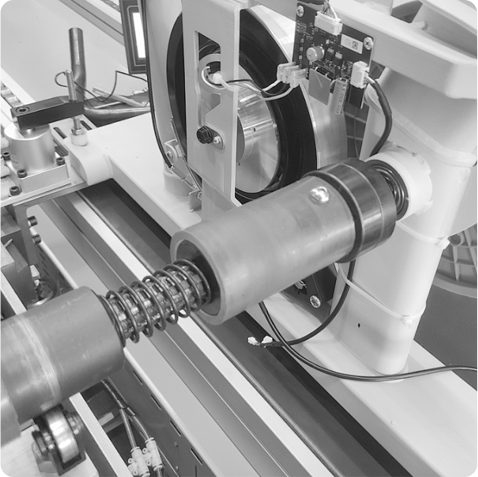
1. Choose a Hook Design That Matches the Assembly
Hooks connect a tension spring to pins, brackets, shafts, or other mounting points. Their shape affects installation clearance, load direction, and the space available around the spring body. A hook that looks suitable on a drawing may create interference once installed in the actual mechanism.
Details buyers should specify
- Hook type: Identify the required loop, machine hook, side hook, extended hook, or other custom end form.
- Hook opening: State the required opening and its tolerance where it affects mounting security.
- Inside radius: Define the bend geometry where stress concentration or fatigue performance is important.
- Hook orientation: Show whether both hooks face the same direction or sit at a specified angle.
- Connection dimensions: Provide the mating pin diameter, bracket thickness, and available clearance.
At Heli Spring, we recommend including an enlarged end-view drawing for customized hooks. This reduces uncertainty around opening size, bend shape, and relative orientation.
2. Understand the Role of Initial Tension
Initial tension is the internal force that keeps the coils of a close-wound tension spring together. An external pulling force must overcome this initial force before the coils begin to separate. After extension begins, the spring's additional force depends on its spring rate and the amount of extension.
Within the intended operating range, the approximate relationship can be expressed as:
F = Fi + kx
- F: Total pulling force at the specified extension.
- Fi: Initial tension.
- k: Spring rate.
- x: Extension measured from the reference state after initial tension has been overcome.
This simplified relationship is useful for preliminary specification, but actual acceptance should follow the agreed test method and the spring's operating limits.
3. Define Measurable Force Requirements
Describing a spring as having high or low tension does not provide enough information for engineering review. Buyers should specify the required initial tension and the working force at one or more defined lengths.
| Specification item | Information to provide | Why it matters |
| Initial tension | Target force and allowable tolerance | Defines the force required to begin extension |
| Spring rate | Force change per unit of extension | Describes how force increases during movement |
| Working length | Installed length or specified test length | Establishes the condition for load measurement |
| Maximum extension | Permitted operating length | Helps assess stress and service-life requirements |
| Hook dimensions | Opening, radius, orientation, and tolerances | Supports assembly compatibility and inspection |
| Material and finish | Stainless steel grade and surface requirements | Addresses strength and environmental exposure |
As an illustrative example, a project may require an initial tension of 2 N and a total pulling force of 8 N at a specified extension of 20 mm. Under the simplified linear model, the corresponding spring rate would be 0.30 N/mm. These figures are examples only; actual values must be determined from the application requirements and validated through testing.
4. Consider Stainless Steel and the Operating Environment
Stainless steel can be suitable for tension springs exposed to moisture or corrosive conditions, but the appropriate grade depends on the environment and mechanical requirements. Buyers should identify exposure to water, cleaning agents, salt, chemicals, and temperature changes rather than relying on the general description of stainless steel alone.
- Specify the required stainless steel grade and applicable material documentation.
- Confirm the expected working load and repeated-cycle requirements.
- Identify any passivation, polishing, or other surface treatment requirements.
- Assess hook geometry carefully because bending stresses can be significant near the ends.
Heli Spring offers tension springs in stainless steel and other materials, with customized surface treatments available according to project requirements. Our team can review the intended application and discuss the information needed to assess material suitability.
5. Validate Hooks and Initial Tension Before Production
Sample approval should confirm both the physical connection and the spring's force characteristics. Dimensional checks alone cannot demonstrate that the hook will withstand the specified load or that the initial tension falls within the agreed range.
Recommended inspection checklist
- Measure free length, body diameter, and wire diameter.
- Inspect hook openings, bend radii, and relative orientation.
- Measure initial tension using an agreed test procedure.
- Verify load at the specified working length.
- Check installation on representative mounting hardware.
- Define additional fatigue or corrosion tests where required.
Recording these results creates a reference for subsequent production inspections and helps clarify whether a design adjustment is needed before the order is released.
Accurate hook specifications and initial tension requirements help ensure that a tension spring connects correctly and delivers the expected pulling force. Buyers should provide clear drawings, mounting dimensions, target loads, working lengths, material requirements, and acceptance tolerances during the quotation and sample-development stages.
At Heli Spring, we support customized spring projects through technical communication and specification review. Contact our team through helispring.net to discuss your stainless steel tension spring drawings, hook configurations, and force requirements before production approval.
Related products
If you are interested in our products, please consult us
CONTACT DETAIL
- Email: helispring@163.com
- Tel: +86-18767775615
- Address: Jinlu Industrial Zone, Beibaixiang Town, Yueqing, Wenzhou City, Zhejiang Province, China.
PRODUCTS
MOBILE TEMERNAL
Wenzhou Heli Spring Manufacturing Co., Ltd. ALL RIGHTS RESERVED.

China Customized Spring Manufacturer