

 English
 русский
 Español
Does Telescopic Spring Geometry Fit Your Assembly Constraints
Industry News-Limited installation space can complicate spring design, particularly in machinery that requires controlled movement, substantial loading capacity, or a short compressed height. A spring may meet the required force specification yet fail to fit the housing, interfere with neighboring components, or restrict the intended travel. Buyers therefore need to evaluate spring geometry alongside operating conditions before confirming a custom design.
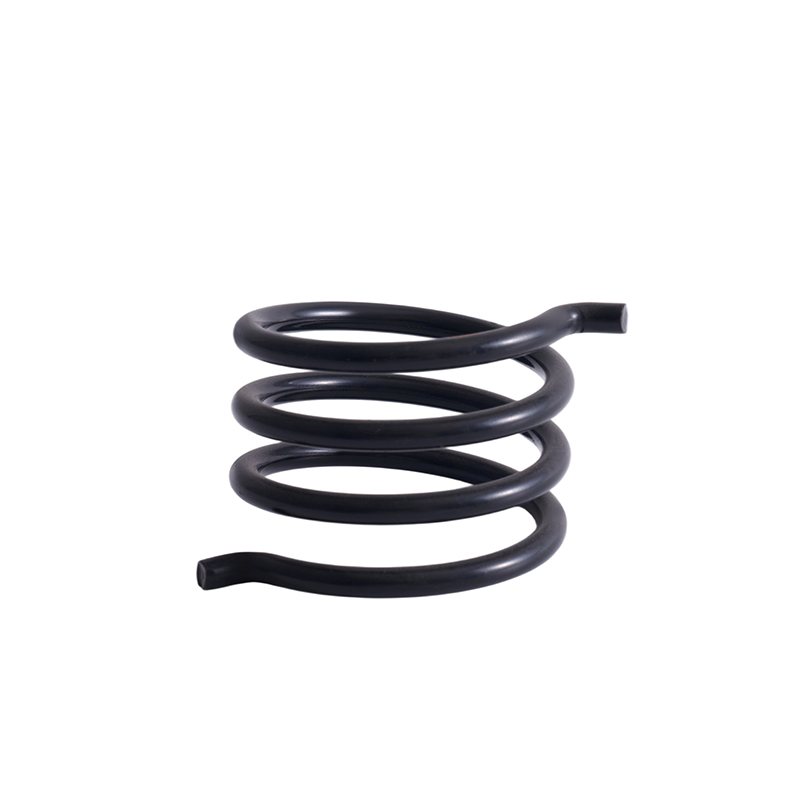
At Heli Spring, we understand that spring dimensions must correspond to the actual assembly rather than being considered independently. Our experience in custom spring manufacturing helps us review customer drawings, dimensional requirements, and application conditions. A High Strength Telescopic Spring project should begin with a clear understanding of the available space, movement range, and load requirements so that the proposed configuration can be assessed before production.
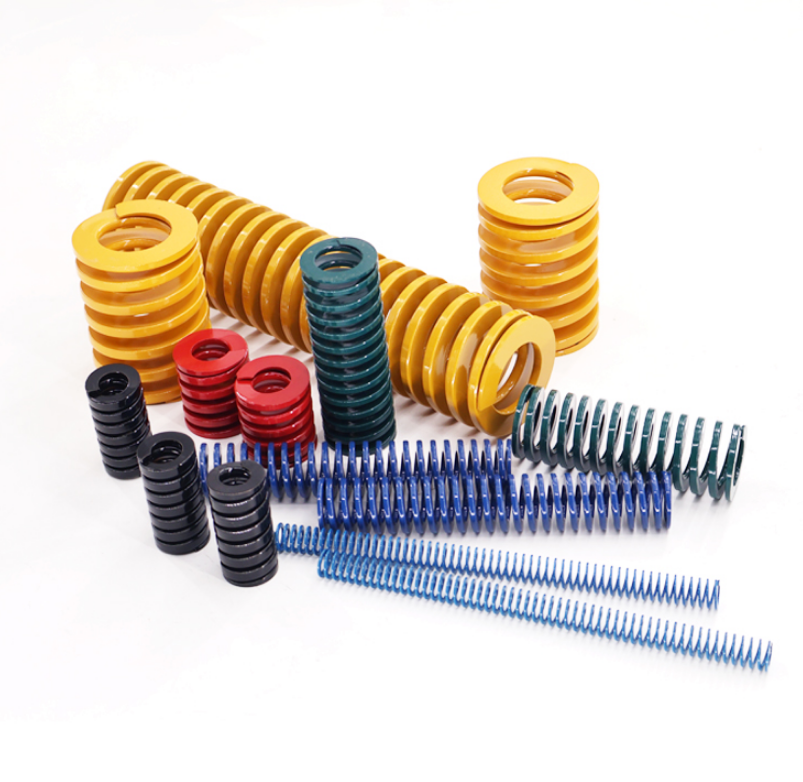
1. Measure the Available Installation Space
The assembly envelope defines the physical limits within which a spring must operate. Measuring only the nominal housing diameter or overall length may overlook important clearances around moving parts.
Dimensions to include in the drawing
- Outer diameter: Establish the permitted diameter, including clearance for movement and manufacturing tolerances.
- Inner diameter: Confirm sufficient space around any guide rod, shaft, or central component.
- Free length: Specify the spring length in its unloaded condition.
- Compressed height: Define the available height at the intended compression limit.
- Mounting clearance: Account for end supports, retaining features, and adjacent components.
At Heli Spring, we recommend sharing a dimensioned assembly drawing or a representative sample. This information helps clarify which dimensions are fixed and which may be adjusted during engineering review.
2. Match Spring Geometry to the Required Travel
Telescopic spring designs can use nested or progressively smaller coil diameters to reduce the space occupied during compression. The actual compressed height depends on the spring configuration, coil geometry, material thickness or wire diameter, and contact between neighboring coils.
Buyers should define both the unloaded dimensions and the required operating positions. A design that fits at rest may still interfere with the housing or reach its mechanical limit before the assembly completes its intended movement.
Important travel-related checks
- Confirm the normal working stroke and the permitted travel limit.
- Check for coil interference at the specified compressed position.
- Allow for dimensional variation in the spring and surrounding parts.
- Verify that mounting supports do not restrict the intended movement.
For example, a compact industrial mechanism may have a restricted installation height but still require significant movement. The design review should establish whether the proposed geometry provides sufficient travel without creating unwanted contact or excessive stress.
3. Consider Load Capacity and Spring Rate Together
Geometry also influences how a spring responds to an applied load. Wire diameter, coil diameter, material properties, and active coil configuration can affect stiffness and force output. Reducing the spring's dimensions simply to fit a smaller housing may change its operating behavior.
| Design parameter | Why it matters | Information to provide |
| Wire diameter or strip thickness | Influences stiffness, stress, and available space | Specified size and tolerance |
| Outer and inner diameters | Determine housing and guide clearance | Permitted dimensions |
| Free length | Defines the unloaded installation envelope | Nominal length and tolerance |
| Working load | Determines the required force output | Force at defined working positions |
| Compressed height | Defines the space occupied near the travel limit | Permitted height and operating limit |
| Material and finish | Influence mechanical properties and environmental suitability | Material grade and treatment requirements |
The required load should be evaluated at specified working positions rather than inferred from dimensions alone. Heli Spring can review these requirements with customers to identify the technical information needed for a suitable customized spring proposal.
4. Check Guidance, Alignment, and Assembly Tolerances
Even a dimensionally compliant spring may experience problems if its supports do not maintain suitable alignment. Insufficient clearance can cause friction or binding, while excessive clearance may permit unwanted lateral movement. These issues become more significant in assemblies with long travel or repeated operation.
Assembly details worth reviewing
- Confirm that guide rods and supporting surfaces align with the spring axis.
- Check the tolerance stack between the spring, housing, and mounting components.
- Inspect contact surfaces for edges or obstructions that may damage the spring.
- Verify the assembly sequence and available access for installation.
- Assess whether lubrication, corrosion protection, or other environmental requirements apply.
These checks help identify interference risks before the design moves into production. A prototype assembly test can provide additional evidence that the spring moves as intended under representative conditions.
5. Validate the Design Before Production Approval
Engineering calculations provide a useful starting point, but physical testing is important for confirming dimensional fit and functional behavior. The validation plan should reflect the spring's load, travel, operating environment, and expected duty cycle.
At Heli Spring, we encourage customers to establish clear acceptance criteria before sample evaluation. Depending on the application, the review may include dimensional inspection, load testing, repeated-cycle evaluation, and an assembly fit check.
- Dimensional verification: Compare measured values with the approved drawing.
- Load testing: Confirm force output at the required operating positions.
- Movement testing: Check for binding, interference, and unexpected deformation.
- Design documentation: Record approved dimensions, material requirements, and revision details.
Telescopic spring geometry must work within the complete assembly envelope while satisfying load, travel, alignment, and durability requirements. Evaluating these factors together helps buyers identify design conflicts before they become production problems.
At Heli Spring, we work with customers to review spring drawings, clarify application requirements, and discuss appropriate sample validation. Contact our team through helispring.net to share your assembly dimensions and operating specifications for a customized spring project.
Related products
If you are interested in our products, please consult us
CONTACT DETAIL
- Email: helispring@163.com
- Tel: +86-18767775615
- Address: Jinlu Industrial Zone, Beibaixiang Town, Yueqing, Wenzhou City, Zhejiang Province, China.
PRODUCTS
MOBILE TEMERNAL
Wenzhou Heli Spring Manufacturing Co., Ltd. ALL RIGHTS RESERVED.

China Customized Spring Manufacturer