

 English
 русский
 Español
Home / News / Industry News / How far can High-Elasticity Precision Wound Tension Springs stretch before permanent deformation appears
How far can High-Elasticity Precision Wound Tension Springs stretch before permanent deformation appears
Industry News-High-performance mechanical systems often rely on a High-Elasticity Precision Wound Tension Spring to manage repeated axial extension under controlled force. The real engineering question is not how much it can extend once, but how far it can repeatedly stretch without entering irreversible deformation territory.
The boundary between reversible elongation and permanent set is governed by elastic limit behavior, which defines the ultimate stress a material can withstand while still returning fully to its original geometry after unloading. Beyond that boundary, plastic deformation begins, and the spring no longer maintains its designed force profile.
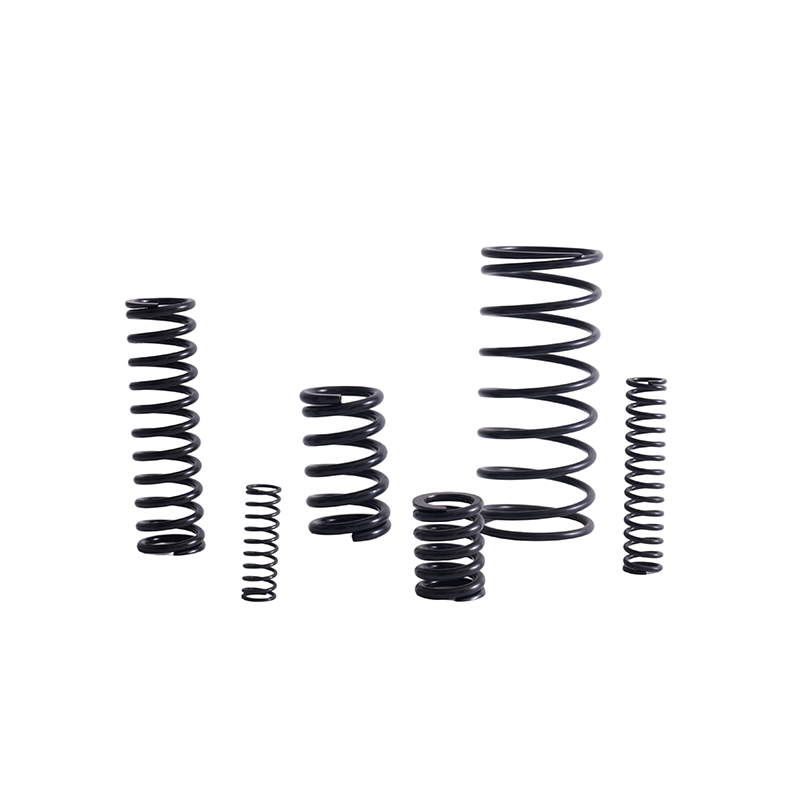
Elastic Range vs Permanent Deformation Zone
Understanding deformation phases
Tension springs operate under torsional stress in the wire as they extend. The elongation remains proportional to applied force until the elastic threshold is reached, following Hooke’s law behavior in the usable range.
- Elastic region: deformation is reversible, spring returns to original length.
- Yield onset: microscopic plastic strain begins inside the wire structure.
- Plastic region: permanent elongation accumulates after unloading.
Engineering references describe the elastic limit as the ultimate stress level before permanent deformation becomes measurable, often evaluated using yield strength or offset strain criteria.
Stretch Capacity in Precision Wound Tension Springs
Typical elongation behavior range
Extension capability depends heavily on wire diameter, coil geometry, and initial tension. Precision wound designs improve consistency but do not fundamentally remove material limits.
Observed working elongation ranges in engineered systems generally fall into these zones:
| Operating zone | Approx. elongation level | Behavior characteristic |
| Low strain region | 0–30% of free length | Highly linear force response |
| Service region | 30–80% of free length | Stable elastic behavior under cyclic load |
| Near limit region | 80–100%+ (design-dependent) | High stress accumulation, risk of permanent set increases |
Beyond the service region, deformation no longer remains fully recoverable due to the onset of yield-level stress in the wire cross-section.
Stress Mechanism Behind Permanent Deformation
Torsional stress accumulation in wire body
Extension springs do not stretch like a straight rod; instead, the wire coils experience torsion. As extension increases, internal shear stress rises until it approaches material yield strength.
- Wire torsion overload: stress concentrates along inner coil radius.
- Yield threshold crossing: micro-sliding of the crystal lattice begins.
- Permanent set formation: residual elongation remains after unloading.
Material behavior studies show that once yield strength is exceeded, deformation transitions from purely elastic recovery to mixed elastic-plastic response, where only part of the elongation is reversible.
Design Factors Controlling Maximum Safe Stretch
Geometry and material interaction
The allowable stretch limit is not a fixed value; it is shaped by structural parameters that define how stress is distributed along the spring body.
- Wire diameter: thicker wire reduces stress but limits flexibility.
- Coil count: more coils distribute load across greater length.
- Initial tension: higher preload reduces early slack but increases stress baseline.
- Coil pitch uniformity: inconsistent spacing creates uneven stress zones.
Precision winding improves repeatability but cannot shift the fundamental yield boundary dictated by material properties such as elastic modulus and yield strength.
Behavior Near Elastic Limit
Subtle transition before permanent change
Approaching the elastic boundary, the spring may still appear stable, yet internal changes begin at a microscopic scale. These changes are not immediately visible but influence long-term performance.
- Micro-plastic strain zones: localized deformation accumulates inside the wire structure.
- Recovery loss: full return length gradually decreases after repeated cycles.
- Force drift: spring rate begins to shift under repeated loading.
Once these effects accumulate, the spring no longer operates within a purely elastic regime, even though external deformation may still appear reversible for short durations.
Practical Interpretation of Maximum Stretch
Engineering practice avoids using absolute ultimate elongation as a design target. Instead, a safety margin is applied below yield-level stress to ensure long-cycle stability.
High-quality precision wound tension springs are typically operated well below the elastic limit to maintain consistent force output over time. Operating too close to ultimate extension shortens fatigue life and increases risk of permanent deformation after repeated cycles.
Closing Technical Insight
The stretching capacity of a High-Elasticity Precision Wound Tension Spring is ultimately defined by material yield behavior rather than geometric freedom alone. Elastic recovery remains stable only within a controlled stress envelope, while permanent deformation emerges once torsional stress in the wire exceeds its elastic limit. Proper design therefore focuses less on ultimate extension and more on maintaining safe working strain across repeated cycles.
Related products
If you are interested in our products, please consult us
CONTACT DETAIL
- Email: helispring@163.com
- Tel: +86-18767775615
- Address: Jinlu Industrial Zone, Beibaixiang Town, Yueqing, Wenzhou City, Zhejiang Province, China.
PRODUCTS
MOBILE TEMERNAL
Wenzhou Heli Spring Manufacturing Co., Ltd. ALL RIGHTS RESERVED.

China Customized Spring Manufacturer