

 English
 русский
 Español
Common Cyclic Compression Springs Overview
Industry News-Cyclic compression springs are mechanical components designed to store and release energy through repeated compression and expansion. Their behavior under cyclic loading conditions makes them essential in systems where durability and consistency are required.
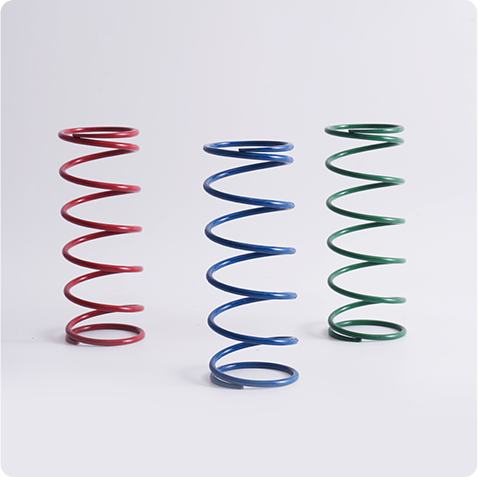
Common Types of Cyclic Compression Springs
Cyclic compression springs are manufactured in several standard forms, each suited to specific mechanical and environmental conditions. The common types include:
Helical Compression Springs
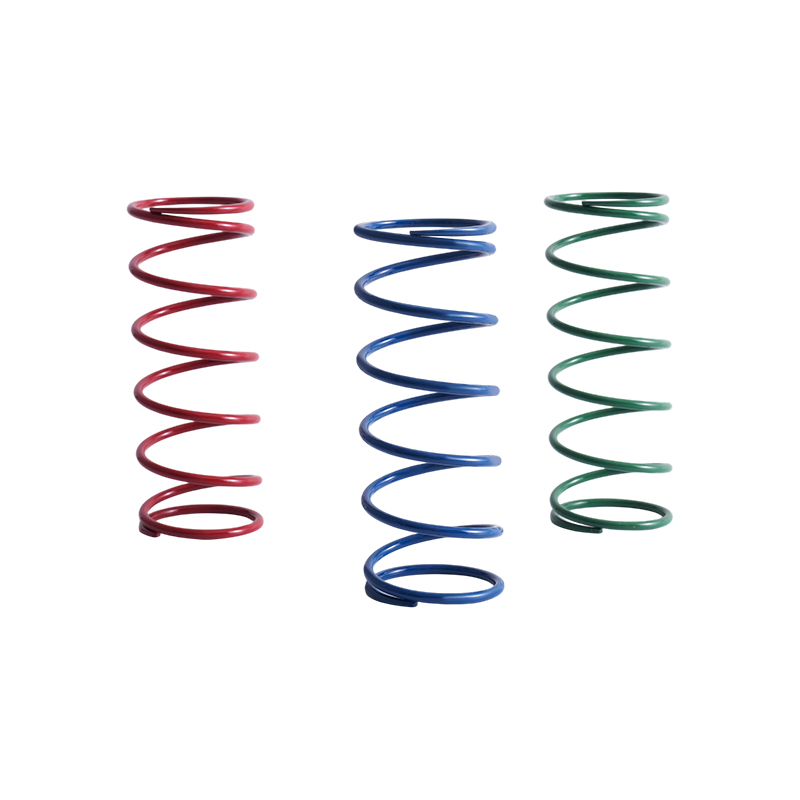
These are the widely used type, consisting of a coiled wire that compresses under load. They are typically made from materials such as carbon steel or stainless steel and are designed for general-purpose applications.
Conical Compression Springs
These springs taper from a larger diameter to a smaller one. This design allows them to compress into a smaller solid height, making them suitable for applications with limited space.
Barrel (Convex) Compression Springs
Featuring a wider section and narrower ends, barrel springs provide improved stability and reduced buckling during compression cycles.
Hourglass (Concave) Compression Springs
These springs have a narrower section and wider ends. This geometry helps distribute stress more evenly and enhances resistance to lateral deflection.
Variable Pitch Compression Springs
The spacing between coils varies along the spring length. This allows for progressive stiffness, meaning the spring becomes stiffer as it compresses further.
Nested Compression Springs
Multiple springs are placed inside one another to increase load capacity without significantly increasing the outer diameter.
Each type is selected based on load requirements, available space, expected number of cycles, and environmental factors such as temperature and corrosion.
Common Uses of Cyclic Compression Springs
Cyclic compression springs are utilized across many industries due to their ability to withstand repeated loading. Their applications can be categorized as follows:
Automotive Systems
In vehicles, cyclic compression springs are used in suspension systems, valve assemblies, and braking mechanisms. They help absorb shocks, maintain tire contact with the road, and ensure proper engine valve timing.
Industrial Machinery
Manufacturing equipment often relies on these springs for vibration damping, load balancing, and return mechanisms. They are commonly found in presses, conveyors, and automated assembly lines.
Consumer Products
Everyday items such as pens, mattresses, and small appliances incorporate compression springs. In these contexts, they provide tactile feedback, support, or controlled motion.
Aerospace Components
In aerospace systems, cyclic compression springs are used in landing gear assemblies, control systems, and vibration isolation units. Their reliability under repeated stress is critical in this field.
Medical Devices
Devices such as syringes, inhalers, and surgical instruments use small-scale compression springs to enable precise and repeatable motion.
Electrical and Electronic Equipment
Springs are used in switches, connectors, and battery compartments to maintain consistent electrical contact and mechanical positioning.
The selection of a spring for a specific application depends on factors such as load frequency, required lifespan, environmental exposure, and safety considerations.
Precautions for Using Cylindrical Compression Springs
When using cylindrical compression springs in cyclic applications, several precautions should be observed to ensure safe and reliable operation:
◆ Avoid Overloading
Applying loads beyond the spring’s rated capacity can lead to permanent deformation or failure. Always operate within specified limits.
◆ Consider Fatigue Life
Cyclic loading can cause fatigue over time. Select springs designed for the expected number of cycles and monitor for signs of wear.
◆ Ensure Proper Alignment
Misalignment during installation can cause uneven stress distribution, leading to buckling or premature failure.
◆ Use Appropriate Material
Material selection should account for environmental conditions such as humidity, temperature, and exposure to chemicals to prevent corrosion or degradation.
◆ Maintain Surface Integrity
Scratches or surface defects can act as stress concentrators. Proper handling and finishing processes help extend service life.
◆ Allow for Adequate Clearance
Ensure there is enough space for the spring to compress and expand without interference, which could affect performance.
◆ Perform Regular Inspection
Periodic checks for deformation, cracks, or loss of elasticity can help identify issues before failure occurs.
◆ Apply Lubrication if Needed
In some applications, lubrication reduces friction between coils and minimizes wear during repeated cycles.
Related products
If you are interested in our products, please consult us
CONTACT DETAIL
- Email: helispring@163.com
- Tel: +86-18767775615
- Address: Jinlu Industrial Zone, Beibaixiang Town, Yueqing, Wenzhou City, Zhejiang Province, China.
PRODUCTS
MOBILE TEMERNAL
Wenzhou Heli Spring Manufacturing Co., Ltd. ALL RIGHTS RESERVED.

China Customized Spring Manufacturer