

 English
 русский
 Español
Batch Consistency: What Should Industrial Spring Buyers Check
Industry News-A torsion spring that passes an individual inspection does not automatically guarantee consistent performance across an entire production order. Differences in wire properties, forming conditions, heat treatment, and dimensional accuracy can affect the final torque and installation fit. Industrial buyers therefore need to evaluate both individual product quality and batch-to-batch consistency.
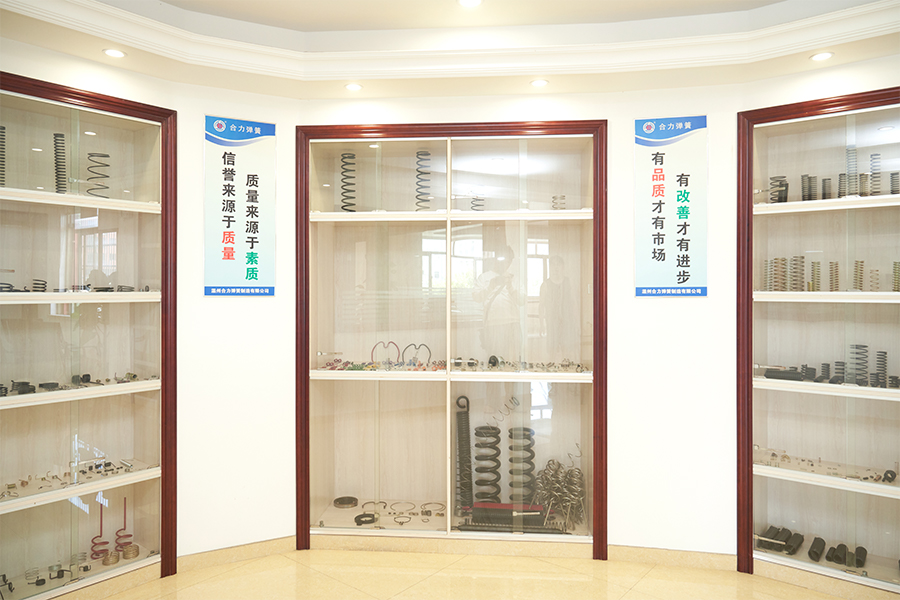
At Heli Spring, we manufacture industrial torsion springs according to customer drawings, samples, and application requirements. Our approach to customized spring projects includes reviewing critical specifications and establishing suitable inspection requirements before production. Several quality control points deserve attention during supplier communication and order evaluation.
1. Check Raw Material Consistency
Material variations can affect spring stiffness, torque performance, and fatigue behavior. Buyers should confirm that the material used throughout an order complies with the approved specification.
Important material inspection points include:
- Material grade: Verify that the wire grade matches the approved drawing and purchase specification.
- Wire diameter: Check dimensional consistency across material batches.
- Surface condition: Identify cracks, corrosion, scratches, and other visible defects.
- Material documentation: Request certificates or inspection records according to project requirements.
We recommend maintaining material batch identification throughout manufacturing. This makes it easier to investigate variations and trace finished products back to their material sources.
2. Monitor Critical Dimensions During Production
Dimensional consistency directly affects installation compatibility. Torsion springs contain several geometric characteristics that require attention, particularly the coil body and spring legs.
| Inspection Item | Quality Control Focus |
| Wire Diameter | Consistency of wire thickness. |
| Outside Diameter | Compatibility with surrounding housings. |
| Body Length | Axial dimensional accuracy. |
| Leg Length | Correct mounting and contact position. |
| Free Angle | Consistency of unloaded leg orientation. |
| Winding Direction | Compliance with the approved design. |
At Heli Spring, we recommend defining critical dimensions and their allowable deviations before manufacturing. Measuring instruments such as micrometers, calipers, optical measuring systems, and angle gauges can support dimensional verification.
3. Verify Torque Consistency Across the Batch
Torque is a key functional characteristic of torsion springs. Even small variations in wire diameter, coil geometry, or heat treatment may affect rotational performance.
Buyers should establish measurable torque acceptance criteria, including:
- Specified torque values at defined working angles.
- Permitted torque deviation.
- Consistent loading and unloading test procedures.
- Sampling frequency during production.
For example, an OEM buyer may require a torsion spring to deliver 2 N·m at a working angle of 90°. The inspection plan should define the measurement setup and acceptable variation rather than relying on subjective assessments of spring resistance.
4. Review Heat Treatment and Surface Quality
Heat treatment influences the mechanical properties of spring materials. Variations in processing conditions may affect hardness, residual stress, and fatigue performance.
Surface treatment also deserves attention, particularly for components exposed to moisture or industrial environments.
Depending on the material and application, buyers can discuss:
- Hardness inspection and heat treatment records.
- Surface defects and forming marks.
- Plating or coating appearance.
- Corrosion resistance requirements.
We recommend including these requirements in the approved manufacturing specification so that inspection expectations remain consistent throughout the order.
5. Establish a Suitable Sampling and Inspection Plan
Checking only a few finished samples may not provide sufficient information for every industrial application. The inspection method should reflect order characteristics, product complexity, and the consequences of component failure.
| Inspection Stage | Recommended Focus |
| Incoming Inspection | Material grade, wire diameter, and surface condition. |
| In-Process Inspection | Coil dimensions, leg geometry, and forming consistency. |
| Functional Testing | Torque at specified angular positions. |
| Final Inspection | Dimensions, appearance, and agreed performance criteria. |
| Batch Review | Inspection records, traceability, and packaging condition. |
For demanding applications, buyers may also request fatigue testing under specified operating conditions. Sample sizes, inspection frequency, and acceptance criteria should be agreed upon before production.
6. Maintain Batch Traceability and Inspection Records
Quality documentation helps industrial buyers evaluate supplier consistency over repeated orders. We recommend keeping records that connect finished products with their manufacturing information.
- Raw material batch identification.
- Production and heat treatment records, where applicable.
- Dimensional and torque inspection results.
- Nonconformity and corrective action records.
- Final inspection and packaging information.
Clear traceability also supports communication between manufacturers, distributors, and OEM purchasing departments during repeat orders or quality investigations.
Make Batch Quality Part of Supplier Evaluation
Consistent industrial spring production requires attention to materials, dimensions, torque performance, processing conditions, and inspection documentation. A clear quality agreement gives manufacturers and buyers shared criteria for evaluating production results.
At Heli Spring, we support customized torsion spring projects through drawing review, manufacturing coordination, and technical quality discussions. Whether your order involves industrial machinery, automotive mechanisms, or specialized OEM assemblies, we can discuss suitable specifications and inspection arrangements based on your application. Visit Heli Spring to submit your requirements and discuss your next spring manufacturing project.
Related products
If you are interested in our products, please consult us
CONTACT DETAIL
- Email: helispring@163.com
- Tel: +86-18767775615
- Address: Jinlu Industrial Zone, Beibaixiang Town, Yueqing, Wenzhou City, Zhejiang Province, China.
PRODUCTS
MOBILE TEMERNAL
Wenzhou Heli Spring Manufacturing Co., Ltd. ALL RIGHTS RESERVED.

China Customized Spring Manufacturer